Showing posts with label BMW i. Show all posts

Wednesday, April 30, 2014

How Much Does it Cost to Charge an Electric Car?


There are many reasons for considering making an electric car the next car you buy or lease. Besides the many environmental benefits, the promise of energy security, the silky-smooth driving experience with instant torque available without delay and low maintenance, one of the best characteristics of electric vehicles is how little they cost to operate. I've covered this topic here before, but this is something that really needs to be driven home. While Electric cars are currently more expensive than their conventionally-powered counterparts, the total cost of ownership over time can certainly be less, and in some cases much less.

Just as with gasoline cars some EV's are more efficient than others, but the average EV needs about 30 kWh’s of electricity to power the vehicle for 100 miles. For example, the EPA rating for the Nissan LEAF is exactly 30 kWh’s per 100 miles. A Tesla Model S 60 is rated at a combined 35 kWh’s per 100 miles and uses a little more energy since it’s heavier and more powerful than a LEAF, while the Chevy Spark EV has a combined consumption rating of 28 kWh’s per 100 miles. The BMW i3’s EPA consumption ratings haven’t been announced yet, but since the i3 is likely to be wear the “most efficient EV” crown, I expect it to be rated somewhere around 26kWh’s per 100 miles. The consumption for all electric vehicles can be viewed at the US Department of Energy’s website: www.fueleconomy.gov

According to Researchers at the University of Michigan Transportation Research Institute, the sales-weighted average fuel economy of all new vehicles sold in the United States in 2013 was 24.8 mpg. The average cost for a gallon of regular gasoline in the US over the past three years was $3.53/gallon. By using 15,000 miles as the average amount of miles a person will drive in a year, the annual cost of gasoline for the average car will be $2,135 per year, using the average cost of gasoline from 2011 through 2013.

Electricity rates vary much more than gasoline across the country, but the cost is much more stable. Unlike with gasoline, there aren’t huge spikes in electricity rates if a refinery has a problem, and neither does the price skyrocket when there is political instability in one of the large oil producing countries as we have seen lately, since all of the electricity we use in America is domestically produced. The average cost of electricity in the US is 12 cents per kWh. Therefore the average person driving an average EV 15,000 miles per year pay about $540.00 per year to charge it. As mentioned, the cost of electricity can vary greatly depending on where you live, but in order to equal the price of the average gasoline car’s fuel costs, the price of electricity would have to be four times the national average, and cost 48 cents per kWh. Nowhere in the US does electricity cost even close to that much. So the average American would save roughly $1,600 per year in fuel alone, and that's if gasoline prices remain around $3.53 per gallon. Gasoline prices do frequently spike up and down, but in the long run they always goes up. Electricity costs do eventually increase also, but not nearly at the pace of gasoline. Plus with fewer moving parts, EV's cost much less to maintain. If you combine the fuel savings with the reduced maintenance costs, it's clear to see an EV will cost you much less in the long run, even if the vehicle costs a little more up front.

Another great thing about electric cars is that you can easily reduce your electric bill by $40 to $50 per month just by being more efficient, and therefore completely eliminate your transportation fuel cost! You really can't use less gasoline unless you drive less or buy a more efficient car, but you can reduce your electricity usage at home and still drive as much as you always have. Simple measures like a programmable thermostat and the use of compact florescent or LED light bulbs can make a big difference. In fact, five 100 watt light bulbs left on continuously for a year use nearly the same amount of energy as it takes to power an electric car 15,000 miles! Here's how: five 100 watt light bulbs use 500 watts per hour. In 24 hours they use 12,000 watts or 12kWh. In 365 days they use 4,380kWh’s. A typical EV that uses 30 kWh’s for every 100 miles will use 4,500 kWh’s to drive 15,000 miles. Simply by turning unnecessary lighting off at your home, you can drastically reduce or completely eliminate your annual transportation fuel cost. Try doing that with a gasser!

Tuesday, April 15, 2014

Touchy "Door Ajar" Warning Light an Issue With Early i3 Builds

If you already drive an i3, you've probably seen this warning pop up on the dash.
The rear coach doors have been one of the more talked about features of the i3. Most people seem to favor conventionally opening rear doors, especially when they are considering hauling the kiddies around in the back as it can be difficult to open the doors in tight parking spaces.

Surprisingly, the feedback I've gotten from many early i3 owners has been generally positive in regards to coach doors, (or at least there haven't been any complaints!) so perhaps in practice they aren't as cumbersome as many predicted they might be. However there does seem to be a problem that has popped up with regards to them. As soon as the first i3's hit the roads I heard from a few of the first owners that the rear door ajar warning light would come on often during cornering. I didn't report on it since it was only a couple people and there are always minor build issues with new models. I figured BMW would get it sorted out quickly and I wouldn't hear anything more on it.


Close me first!
That doesn't seem to be the case. We are about seven months into production and I've now had more than a dozen i3 owners tell me they experience this regularly if they don't close the rear coach doors very hard - in other words slam it shut. Some of these people have only taken delivery very recently, so they aren't driving some of the first cars off the assembly line. They don't believe it's a safety concern, and the door is not in any danger of opening as it is securely locked. There doesn't appear to be a physical switch in the door jamb, so it would seem the sensor is some kind of magnetic switch inside the door that needs to make contact and is extremely sensitive. So much so that it loses contact when the car is in a tight turn or goes over a bad bump in the road.

This really isn't anything alarming and not completely unexpected. The i3 is a brand new model and BMW is using materials and manufacturing processes they have never employed before. There will likely be some minor issues like this, however it does need to be corrected. As I'm sure many of you can attest it's quite annoying to have one of these warning lights turn on and off all the time, especially at night when the display is brightly illuminated. I'd hate to have to resort to the decades old "black tape over the annoying warning light" solution on my brand new $56,000 urban mobility pod!

Thursday, April 10, 2014

Is The BMW i3 "Too European" For the US Market?


It's been called edgy, futuristic, polarizing, ground breaking and even flat out hideous. It has funky lines, rear coach (suicide) doors that can't be opened unless the front doors are and rear windows that are permanently closed. The nose has a pronounced "underbite" that any respectful orthodontist would love to correct and the tires are so skinny they look like they should be on something coming out of BMW Motorrad, and certainly not on a proper BMW automobile.

The internet is full of extremely harsh criticism of the i3's exterior styling. However most seem to praise the interior for it's modern, stylish and open feel, especially for such a small car. I don't think I've read a single article where the author didn't at least approve of the interior design, while most gave it very high marks. The term "Scandinavian loft" has been used frequently to describe the modern, open feeling the i3's interior offers.

But then there's the unconventional exterior styling that many people just can't get past. I have to admit, I didn't love it when I first saw it, but I never actually hated it. Then I felt a lot better once I saw it in person and got to drive it. The styling has definitely grown on me and I genuinely like how it looks now.  Others don't fell the same way. In fact, the i3's unique appearance has been discussed ad nauseum since its introduction. Here are a few examples:


On this message board, one person asked the question: Did they try to make it ugly?

Brad Berman of plugincars.com: Did BMW screw up the visual design of i3 electric car?

Perhaps one of the most offensive stories was from The Slate when they wrote: BMW i3 review: Electric car is a cheap, ugly Tesla Model S with an SUV on the side

Would this Citroen be popular in the US?
Then I started thinking about all the criticism and began to wonder if it is mostly driven by American opinions. BMW has consistently maintained the i3 is a "city car". Unlike Europe, city cars just haven't been accepted here yet. The European roads are full of small cars that would certainly appear "unconventional" to American motorists. Take smart for instance. There are smart cars everywhere you look in Europe, yet smart can barely sell a few hundred cars a month in the entire US. Also, many of the cars there look a bit more modern than what you typically find on American roads. Are Europeans just more accepting of new ideas and styling that pushes the limits of acceptability? Is form following function an easier sell to the European car buyer than it is to their American counterpart?

John Voelcker, editor of Green Car Reports and one of the industries most respected journalists covering the green car and alternative powertrain scene recently wrote this: 

"I'd agree that the BMW i3 is the best city car yet developed. Which is fine for Europe. The problem is that in North America, virtually no one has ever said, "Honey, we need to go buy a city car!"


Will America warm up to the unconventional BMW i3?
This does make sense but I'd argue that while it is a "city car", it is just as well served for the outlying suburbs of the big cities, making it a great commuter car for the daily grind, while still offering the spirited driving experience many want for the weekend joy ride. Which leads to the next questionable decision BMW made which is likely part of the reason so many people have been critical and that's the range. You can't go too far on that weekend cruise unless you paid the additional $3,850 and got the range extender. The EPA range rating hasn't been announced yet but it's widely expected that the i3's electric range will be officially pegged at about 80 to 85 miles per charge. America's a big country and with gasoline relatively cheap compared to the average price in Europe it's common to drive hundreds of miles at a clip here. I believe if BMW would have increased the i3's range a bit, so the EPA range rating was 100 or more miles, they would have eliminated a lot of the negativity surrounding the car so far. Of course the Europeans would like more range also (who doesn't?). It just seems less important there since they are likely to drive less than we do in the US and some would argue that European customers look at a car purchase more pragmatically in many cases.

BMW CEO Reithofer introduces the i3
Will the "unique" styling and short range conspire to limit the i3's success in the US market? Only time will tell. There will certainly be an initial surge of orders but once they are filled will the i3 continue to attract eco-conscious buyers to the brand. According to BMW, i3 ordering has been robust and they have over 11,000 orders in the bank worldwide. US ordering has just recently begun and the first deliveries are due here in only a few weeks but BMW hasn't said how many of the 11,000 orders have come from American customers.  BMW must be happy with i3 sales so far though because they recently ordered two more Engle molding machines that make i3 body shell components. They are only about six months into production so if they need to buy more production machinery already, that is likely a good sign.

Ready or not America, here i come!
What do you think? Do you like the i3's appearance? Do you hate it or are you in the middle? Will it be more accepted by European customers or will it have universal appeal? Let me know in the comments below.

Wednesday, April 2, 2014

BMW i3 Bottom Line: $494/mo With No Money Down


I wrote this post a few days ago for BMWBLOG. There has been so much speculation and incorrect information circulating in regards to the OwnersChoice with Flex option that BMW FS is offering on the i3 that I wanted to get some info out there on it. It's a new product, so it's certainly understandable why there are questions. However I've read where people have gone as far to call it a "convoluted scam" as if it's just a way to charge the customer more money and in fact it's the opposite. Using OwnersChoice with Flex you can drive off in a base i3 BEV with no money out of pocket for as little as $494/month depending on where you live.  Now that BMWBLOG has had it for a couple days and InsideEVs has run it also, I figured I'd put it up here also. If you have any questions, please fell free to ask in the comments and I'll answer whatever I can.

 BMW i3 Bottom Line:  $494/mo With No Money Down

There has been a lot of speculation with regards to financing rates and residual values for the BMW i3. A few months ago we ran this story where we posted preliminary i3 residual values that were lower than the residual values of other electric cars.

BMW Financial Services evidently took a closer look and now that the official financing figures are out we see they increased the residual values by 4% across the board.  

Original Reported Residuals       Actual Residuals 
  • 24 month residual – 49%                       53%        
  • 30 month residual – 44%                       48%
  • 36 month residual – 39%                       43%
  • 42 month residual – 34%                       38%
  • 48 month residual – 28%                       33%
  • 54 month residual – 25%                       29%
  • 60 month residual – 21%                       25%
(These figures are based on 15,000 miles per year. Add 2%for 12,000 mile/year leases, 3% for 10,000 mile/year leases.  Extra mileage is charged at 20 cents per mile.)
  

Additionally, the online “Build your Own” BMW i3 site now features monthly payment calculations for OwnersChoice with Flex. Up until now, only the MSRP was listed. OwnersChoice with Flex is a new product created by BMW Financial Services specifically for the i3. It allows the customer to take up to $7,500 off the price of the car as a capitol cost reduction, thus allowing lower monthly payments. The customer does not have to pay the money up front and basically owes that to BMW FS. The reason $7,500 is the cap is because that is the maximum amount of the federal tax credit that the i3 qualifies for. BMW FS is basically lending the customer the money so they can have lower monthly payments. 

The customer can repay the Flex capitol cost reduction anytime (like when they get the money back on their taxes) or wait until the end of the term. At the end of the specified term, the customer has the choice of returning the car and paying the amount they took as the capitol cost reduction (if they didn’t repay it already), or keeping the car and paying the residual value, plus the unpaid capitol cost reduction. It’s really a purchase, that offers the benefits of a lease and lets the customer decide whether they want to keep the car or return it at the end of the term. 

So what’s the bottom line on a 36 month OwnersChoice with Flex work out to? With no money out of pocket, depending on where you live you can drive off in a base i3 BEV and your payments will be $494 per month for 36 months. That’s with taking the full $7,500.00 capitol cost reduction (which you then owe BMW FS) and with only 10,000 miles per year allowed. If you load the BEV i3 up with every available option the monthly payment raises up to $661 per month. It’s worth noting that these figures do not include sales tax. There are states where electric vehicles are sales tax exempt (like New Jersey where I live) and it appears the i3 site does not add the sales tax regardless of whether you use a zip code where sales tax is collected or not. Perhaps that will be corrected though, as they only updated the site to show the monthly payments within the past day or so. 

The OwnersChoice with Flex was developed by BMW Financial Services specifically so i3 customers can realize the full $7,500 electric vehicle federal tax credit. When leasing an i3, BMW FS will only pass $4,875.00 of the $7,500 federal tax credit along to the customer. They are standing by their statement that they do not get the full $7,500 credit, and are passing along every dollar that they do get to the customer. This likely makes leasing a poor option on the i3 when compared to OwnersChoice with Flex.

Wednesday, March 26, 2014

Bridgestone's "Ologic Technology" and the i3


Much has been made about the tall narrow tires on the BMW i3. They are really unlike any tire on any other car currently in production and they certainly don't look like they belong on a BMW. However BMW and Bridgestone did their homework on this, and accomplished the goals they set out to. That was to develop a tire that is not only efficient, but also delivers the performance expected of any BMW.

How did they do it? Ologic technology. Yep, they developed something so new and advanced you have never even heard of it before! So while I as the Geneva Motor Show a few weeks ago, I made it a point to stop by the Bridgestone exhibit to ask about this new mysterious "Ologic Tech". As I approached the Bridgestone area, I could see they had a Capparis White i3 on display with it all lettered up promoting this new Ologic technology, and they even had an award in a case next to it that proudly displayed that Bridgestone won the 2014 Tire Technology International award for Tire Technology of the year! Fantastic! I was even more pumped up to find out what this new Ologic technology was. Could it be a new special rubber compound or tread pattern?  I was about to find out.


Tire Technology International Awards 2014 winner interview – Tire Technology of the Year

So after asking the information desk for someone to interview I was introduced to a Brigestone product manager to answer my questions. I didn't waste any time. My first question was: What exactly is Ologic technology? I don't have the exact words he used but to paraphrase he basically said "Ologic Technology is our way of creating an efficient tire that still offers optimum performance. By using a very tall narrow tire we simultaneously reduce drag, rolling resistance and tire deformation. The height of the tire in relation to the width also increases the contact patch which allows for retain the dynamic driving characteristics of a much wider tire" So Ologic is just a name of a concept, not any specific rubber compound or such? Yes. Alright well that was a little let down because I figured I was going to get a lesson on rubber or tread or something other than what I heard.

So why are they so special? They must have done something right to win the Tire Technology of the Year award, no? Here is an excerpt of how Bridgestone explains why these are indeed special:

"A Unique Concept for a Unique Car
 
BMW has achieved a genuine milestone with the i3 electric car. Doing justice to its unprecedented levels of both efficiency and performance demanded more than just a new tyre but an entire new tyre concept. Bridgestone’s answer came in the form of the ologic technology, which capitalises on the synergies of a large diameter coupled with a narrow tread design. The result is a tyre that delivers significant improvements in aerodynamics and rolling resistance, while still offering outstanding grip in wet weather conditions.

Combining a large diameter with a narrow tread pattern has several advantages. While the tread on smaller diameter tyres is typically inclined to excessive movement or “deformation” during driving, the larger diameter and higher belt tension significantly reduce tyre deformation and therefore conserve energy that is otherwise lost through internal friction which helps to reduce rolling resistance. By the same token, the narrow tread concept improves aerodynamics. The most spectacular achievement, however is that these improvements do not involve a trade-off in terms of safety. The tyre’s long contact patch (relative to its narrow width),  revolutionary tread design and compound still ensure outstanding grip in both wet and dry conditions."


They have obviously done something right because even though they look like they would be better suited on a motorcycle, the i3 handles exceptionally with them. I've spoken to quite a few people now that have had an i3 on a race track and all of them were genuinely surprised at how well the car performed. In a few weeks I should be taking delivery of my i3 and I can the really put the "Ologic Technology" to the test. :)


Wednesday, March 12, 2014

Comprehensive i3 Video Review By Nissan LEAF Owner in the UK


It seems that nearly every day now there are new short video clips of i3 reviews posted on YouTube. When I come across one that I feel is done very well, I'll post it here. Such is the case with the above video made by Grant Thomas from the UK. Grant maintains a blog called "The Grant Thomas Blog: Sustainability, Electric Cars & Technology News and Comment" where he posted this i3 video review.

Grant owns a Nissan LEAF so he is an experienced electric vehicle owner and in my opinion that gives his review a little more credibility than some others done by journalists with very little real life electric vehicle experience. The video is about a half hour long and he does manage to cover a lot so pour yourself a nice cup of coffee (or a glass of wine), and kick back and enjoy!

Monday, February 3, 2014

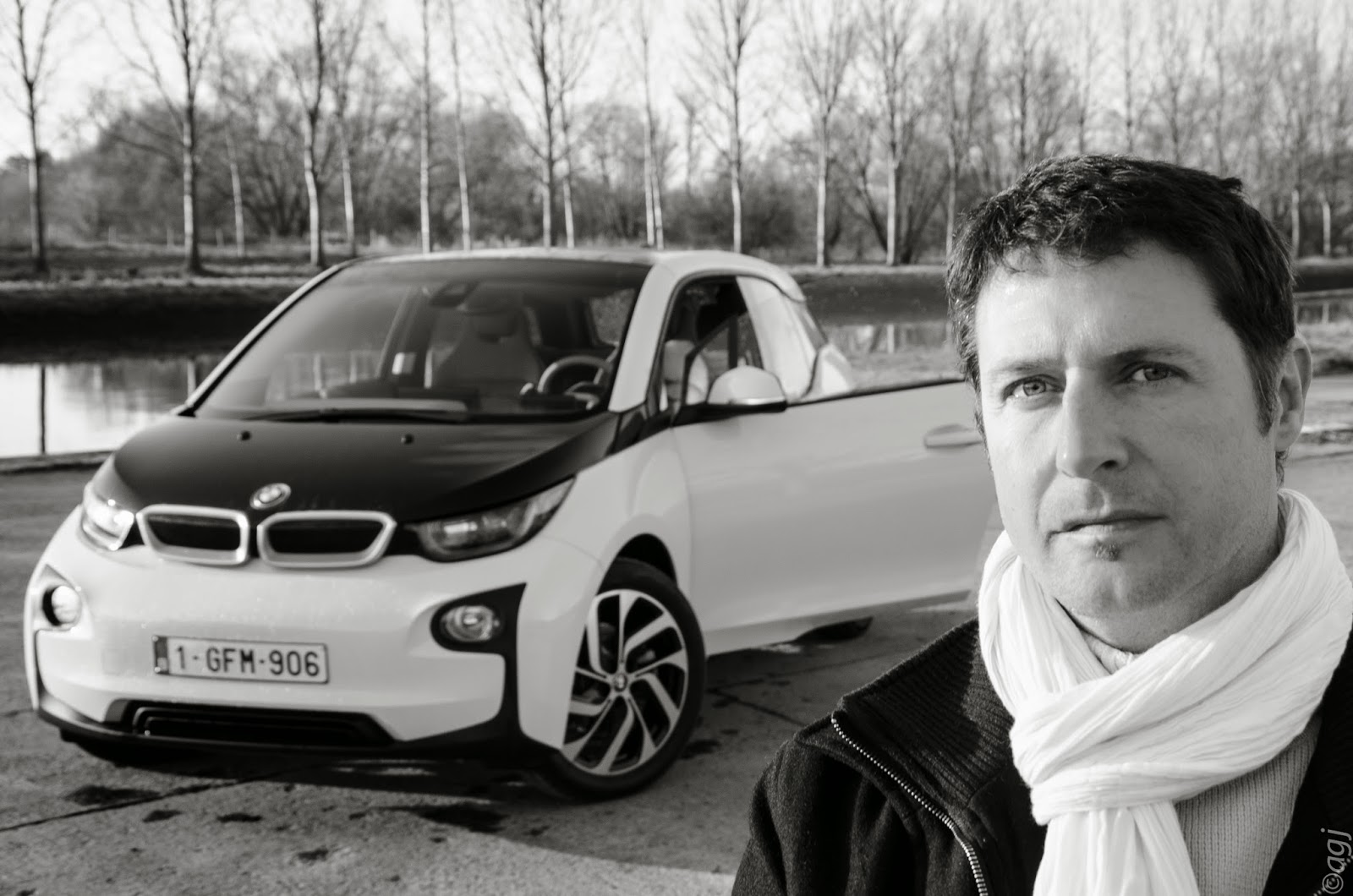
BMW i3 Born Electric Guest Blogger: Meet Toni From Belgium


A while ago I announced that I would be starting a new series here called, "I was Born Electric on...". The series will be featuring readers who are i3 owners and who are willing to share their thoughts on the car after owning it for a while. They will begin the post by introducing themselves and stating the date they were Born Electric, which is when they picked up their i3. Andy from the UK kicked off the Born Electric series and we then visited Hil from Holland. We'll now be traveling to Belgium to visit with Toni and his new Capparis White i3:  


My name is Toni and I was Born Electric on Monday, 27th January, 2014.

The first time I realized that there was an alternative to fossil fuels for propelling a car was in early 2011, when I came across an electronic brochure about the Opel Ampera, the European sibling of the Volt. The more I read about it, the more I was convinced that my next car had to be an electric one.
The reason why I didn't go for the Ampera back then was stupidly financial : 50.000€ for a car was way above what I was willing/able to pay. 
Of course, there were other more affordable electric cars out there. But maybe I was not ready for the leap of faith into electro-mobility yet. Range anxiety was clearly an issue I had to deal with while I waited for my savings account to be able to take the hit of a new car.

Three years later, things had clearly evolved. Both on the EV market and in my personal situation. In the latter, I had enough spare funds to afford a reasonable down payment on a premium car. Moreover, the extensive immersion into electric car literature helped me to come to the conclusion that I did not really need a range extender since more than 95% of my daily commuting could easily be covered by a BEV. The question was then : which car was going to be the one. Ampera/Volt? No, though it definitely is a fantastic car, it still has a tail pipe and I did not want to buy an end-of-cycle model. Tesla? No, too big and too expensive, I did not want to take out a mortgage for the sake of buying a car.  Nissan Leaf? Er, no.  
The BMW i3? Well ... I must admit that my first impression was negative. Not because of its design; actually I am fond of its looks since the very first concepts that appeared in 2011.  But rather because it is a BMW! I never liked BMW. I always considered that BMW was making cars to suit arrogant petrolhead jerks (with all due respect, of course!).

And then I test-drove it. And fell in love.

Was I ready to overcome my prejudices and become a BMW driver myself?  Definitely. Biases are wrong, the car drives like a breeze, the technology inside is outstanding and I too can be a jerk sometimes. : )

So, in order to do penance for my past biases, I decided to devote this blog post to crushing some preconceptions that have been floating around the i3 in some reviews.  And I'll do that from the authoritative position of being the happy owner of a "Shamu Edition" (Capparis white & black - think Shamu the whale)


It is a city car:
No, it is not. Though the car handles incredibly well in an urban environment, it has nothing to be ashamed of when cruising at highway speed. It is fast and responsive. Steering is precise and forgiving at 130 km/h (80 mph).  Overtaking on motorways is a feast. It is a BMW after all, is it not?

The i3 is particularly noisy at high speed:
No, it is not. My first extended drive of the i3 has been the trip back home after delivery at my iAgent dealership. 50 km (30 mi) from Waterloo (Brussels area) to the Mons area where I live. Since the battery was almost fully charged, I decided that I could afford the luxury of squandering away precious kWh's on the E19 motorway. In addition to discovering the driving dynamics described above, I was also curious to put to the test the recurrent criticism I read about unpleasant airflow noises.  I can confirm that in-cabin noises are like taste; there is no accounting for them. I, for one, was not inconvenienced by the airflow at all. I even enjoyed it.


The trunk is too small and the suicide doors are a hindrance:
The question is : Compared to what? 
I am a small car guy. Before the i3, my car was a Mini Cooper. Before that, I owned a Mercedes A-Class (2004 model). Before that, a (discontinued) Rover 220sdi. I know what a small car is. And the i3 is no small car at all by my standards. The trunk offers enough space to generously accommodate the weekly shopping for a family of four. There is plenty of space for my Victorian longbow, arrows included, or for my eldest son's guitar, amp included. 

As for the coach doors, once again it all depends on where you come from. Compared to the coupé-style doors of my Mini, the i3's "antagonist" doors, as they are called in French, are a major step forward in terms of ease of access and comfort. Or to put it in my youngest son's words : "Sooo cooool!".


Materials used for interior trims do not feel "premium":
That was a tricky one.
As I said, price was an important parameter for me, as it surely is for most of us. Given that I accepted the idea of disbursing 40.000+ € for a car, the outlook of spending my driving time in a sleazy environment was distressing me. Of course, I did have the opportunity to feel, touch, smell the interior materials a couple of times before I ordered the car. But assessing the quality of a dashboard or of a leather upholstery is like testing a spring mattress at the mattress store.  No matter how long you try to figure it out, the only way to be sure is to turn the lights off and literally sleep on it.
Though I have not slept in my car (yet), now, I know. The interior is largely up to the price paid. Comfy, stylish, extremely well finished down to the most minute detail. I am almost ashamed of having doubted.  By the way, my i3 has the Lodge interior (Giga world). 

The i3 is just an overpriced Zoe: (I've been reading this one a lot in the French-speaking press).
For the non-European reader, let me first explain that the Renault Zoe (en.wikipedia.org/wiki/Renault_Zoe) is a sort of cute good looking Nissan Leaf, with a French touch.  Don't get me wrong; I think that the Zoe is a nice little car but, c'me on! 

How can a professional journalist put the i3 and the Zoe on the same footing.  How can you compare the past to the future? A car made of steel to the first mass produced car made of aluminum and carbon fibre?
I wish I were an engineer and be able to explain why and how a car with a CFRP body drives so much better than a conventional one. But I am just a linguist and you'll have to bear with my poor description : in the i3, you're just in control!  

The rigidity of the thing makes you feel that there is nothing the car won't take.  You feel light and super secure at the same time.  If you don't believe me, just arrange your own test drive.

Considering the technology, range is unimpressive:
My take on that may sound unconventional.
More range would have been inconsistent with the concept of “great driving experience in a sustainable way”. If my average daily need is 40, why should I store in my car 4, 6 or even 8 times the energy and resources that are necessary?  

In all fairness though, I must confess that I am still struggling with an instinctual range anxiety.
And this is where technology comes to the rescue. The amount of information that comes through the screens is just impressive. The dynamic range assistant, the Eco-route guidance, the graphics, everything has been thought and designed in order to alleviate whatever range fear that I still could have. And it works. On top of that, the resolution quality of the 10.2" screen (professional nav) is remarkable.

I know that there is a bit of controversy as to why BMW did not include a State Of Charge reading in the i3 as in the ActiveE or the Mini E.  Since I never had the chance to drive an EV with a SOC, I guess that my point of view may be considered as neutral on that.

The i3 is an expensive high-tech toy for tree-hugging geeks:
Yes.
It is.
But it is much more than that at the same time.
It's a car.
With all the features, functionalities, looks, behavior, style, technology and feel of a great car.
And yes, it is electric.

So is my i3 living up to all of its promises?
Not quite all of them, for the moment at least.
In Belgium, some of the much anticipated 360° Electric services have not been fully rolled out yet. The Add-On-Mobility (Access or Alternate Mobility program as it is called on other markets) is still largely undefined and the ConnectedDrive services are having a bumpy debut.  Nevertheless, the local BMWi team is working hard on it.

As far as the actual car is concerned though, I can happily report that I haven't found the least flaw yet.
My i3 is the second BMWi to have been registered in Belgium.
And I am very proud to be among the first owners. 

2/5/14 EDIT:
Toni has had a few people ask him about the range since this post went up so he asked me if I could add these words to the post to cover what he has observed so far:

Hi, thank you all for the the nice words!


As for the range, I haven't pushed it to its limits yet. And I doubt I'll ever try to; I'd rather do away with my range anxiety in a non-traumatic way :)

Apart from the maximum range, I think you have to consider the "comfortable" range the car is giving you. By "comfortable" range, I mean the distance you can cover without ever bothering about modes, driving style or even outside temperature and this includes short highway portions. In the case of the i3 (BEV), my experience of the "comfortable" distance is ~62mi (100 km) on one charge.  Remember that, within this range you can drive the way you want. Of course, this "comfortable" range can be jeopardized by a particularly aggressive and non-responsible driving. But, as far as I know, only anti-EV journalists are capable of driving this way.

If your daily commuting includes larger highway portions and/or represents between 62 and 80 mi (100 to 130 km), then I recommend using ECOPRO. Mind you, ECOPRO is not a sub-standard COMFORT mode. The car behaves much like it does in COMFORT mode with only slight differences. Most of them remain unseen by the driver. The only one you do notice is the max speed capping. This speed capping works much like a speed limiter on a conventional car, i.e. you can adjust it in the settings and override it by pressing the right pedal down to "full throttle" when overtaking or in case of emergency. For Europe, ECOPRO default setting is 110km/h (~68 mph).

If you really need to go much farther than 80 mi (130 km) on one charge in a consistent way, you'll probably have to master hypermiling techniques and accept that the ride may become stressing sometimes :)
In this case, I'd recommend going to for the REx version.

If you own an i3 and would like to participate in the Born Electric series here, you can email me at: tom.moloughney@gmail.com

Thursday, January 30, 2014

BMW i3 Born Electric Guest Blogger: Meet Hil from Holland


My i3 was delivered to my home on a flatbed truck, more than 300 kilometers (180 miles) from my i Agent. Traveling that distance in an i3 BEV on one charge isn’t possible and the i3 being my first EV, we agreed that the car be delivered! As it stands, I’m probably the first i3 owner in Fryslân, Holland and I’d like to report on my first month’s experiences!
A while ago I announced that I would be starting a new series here called, "I was Born Electric on...". The series will be featuring readers who are i3 owners and who are willing to share their thoughts on the car after owning it for a while. They will begin the post by introducing themselves and stating the date they were Born Electric, which is when they picked up their i3. Last week we had the pleasure of kicking off the series with a post from Andy, who lives with his new i3 in the UK. We'll now be hopping over to Holland to visit with Hil and his new Ionic Silver i3:       

    Hello, my name is Hil and I was Born Electric on Monday, December 30th 2013. 

My recent BMW history
My BMW before the i3, was a 5 door 118i (F20) which I bought for it’s economy and comfort. It was less the sports car than the Z4M Coupe I had before it, but with more room and an adjustable suspension, it meant super daily driving pleasure! Just after the “1” came, BMW launched their ActiveE program with a preview of the concept i3 and i8 in Rotterdam. With my eldest son Tom (also a motor head!) our short, snowy test drive in the ActiveE sold us to the i concept!

The big wait...
This past summer, BMW made production slots for the i3 available in Holland. An i3 in the autumn? Great! In early September the i3 was ordered and after a few glitches in the ordering process (an other color and not fully optioned!), the i3 turned up in the early winter, on snow tires, in Ionic Silver (which is more blue than silver) and with it’s cool Adaptive LED headlights.


Daily Use:

I use the car mostly for local trips, from one village to the next.  As a rural Family Doctor, it’s great to do my rounds in the pre-warmed comfort of the i3! To now the only EVSE I use is the standard socket plug-in, delivered with the car. It charges at 3.4 kW which is fast enough for my daily trips. Occasionally I make a longer trip to meetings, for post-grad education or visits to family and friends.  Those trips are between 100 to 140 kilometers (60 - 87 mi), but according to my i Agent (and BMW), form no problem to the all-electric i3! For on the road charging, there’s also a growing network of quick DC chargers in Holland, thanks to Fastned!

Adventurous Start:
True to the EV pioneer calling, on New Years Eve, the family traveled with the i3 to our traditional  New Years celebration at good friends. They live 103 kilometers (61 miles) away.  At the start, the i3 gave me a range of 120 kilometers, more than enough! But beware,  this figure is based largely on previous driving habits and I had only driven 70 km! But 120 km should be enough! We left at 6 pm, outside temperatures 5 degrees Celsius with a stiff southwesterly headwind and 3 adults in the car with the trunk packed. My normal ICE driving style is to limit my freeway speeds to 115 kmh (70mph) and on two lane roads, I drive 100 kmh (60mph). That evening I set out to copy my 118i driving style to see how the i3 fared. After 40 km (26mi) the battery had just 50% charge left! What??? Total i3 range as claimed by BMW to be 130 km (80mi) per charge, not a scanty 80 km (50mi)! At this rate we’d have to walk 20 km to our friends house. What now? Turn back and take the reserve ICE car or charge up somewhere?

I knew of a quick charger along the freeway nearby, so we decided to drive on! In the confusion we took the wrong exit and drove an extra 10 km to get back on track.  My first encounter with a public EVSE was a disappointment. Fumbling in the dark with wind and weather. the quick charger didn’t charge! I called the ANWB help desk number (=AAA in the US) who told me that there was a working charging point 30 km ahead on my route. The question again: press on or turn back? Well, we decided to "Go (South-) West"!

By now I had become a bit more EV savvy and after studying the settings and menu of the i3,  it seems I had started out in the standard, uneconomical but sporty “Comfort” mode! In “EcoPro” mode (EP) the range sprung from 55 to 65 km and in the EcoPro+ (EP+) mode, all of a sudden I could go 81 km! I kept it at EP+ and drove on with the Southwesterly storm at full head. On the freeway ahead, a Motor Home drove a leisurely 85 kmh (50mph) so I slid behind it and slipstreamed further. Meanwhile my hands and feet had turned to ice, as had everyone in the car! EcoPro+ is a spartan experience, with no heated air or seats, but it got us to our friends house, with 3 km to spare. We had become true pioneers on New Year’s Eve!

A Second Go…
The next week I had a meeting in Utrecht, at 138 km (84 mi) from home. After the cold experience on New Year’s Eve you might think that I wouldn’t consider an even longer trip. But that’s not what EV pioneering is all about my friends, and to be honest, the first trip turned out fine! But for this trip, I prepared myself. To ward off the cold, I took a hot water bottle along, put it on my lap, covered with a fleece blanket. From the start, I drove moderately (max. 100kmh=60mph) in EP+ mode and strictly followed the EcoPro route chosen by the BMW Navigation. It takes you over roads with lower maximum speeds but the route is shorter. My planned 1st destination was a public charging station 10km (6mi) from the meeting place and I had a folding bicycle in the trunk (yes it fit!) for the last leg. But the range expanded as I drove! I left with a calculated range of 124 km (77 mi) and after the first 25 km (15.5 mi), still had 119 km (74 mi) left! With this kind of magic the i3 grew on me! Once on the freeway I hit headwinds, so chose a truck to slipstream behind at 93 kmh (58 mph) on the cruise control.  Except for some wind buffeting I really enjoyed my radio in the quiet of the cabin! I reached the meeting venue at 138 km (86 mi) without the wayside charge! Range anxiety is a thing of the past!
DC Quick charging at 50kW's on a Fastned CCS Quick Charge Station

In the parking garage there was an EVSE which only charged at 3.4 kW instead of the expected 7.4 kW. After 2.5 hours the state of charge increased from 5 to 27%, not enough to get home! But I had enough range to get to the nearest Fastned DC 50kW quick charger, 40 km away. Within 30 minutes I had more than 90% of charge, enough to get home comfortably. When the Fastned network is expanded from the present 5 to the planned 100 stations at the end of 2014, cross country trips in Holland with the i3 will be no problem! At the end of 2015 the projected planning even calls for 200 stations, one for every 40 to 50 freeway kilometers!

EcoPro EcoPro+ and Comfort:
The difference between Comfort and EcoPro modes is purely performance. The i3 Comfort mode would be the Sport mode in an ICE BMW mainly because of the incredible acceleration! EcoPro differs from EP+ more because in EP+ the Seat and Main Heaters are turned off.  In cold seasons, choosing EP+ mode makes the cabin icy cold, even with a hot water bottle and fleece blanket!

My lesson is: when range is at issue, put the i3 in EP mode but turn the heater off with the dashboard button. The seat heater still works and hardly reduces range, but keeps you warm! If the windows fog, the heater rapidly clears them and when done, switch it off until needed again.

In Conclusion:
Yes, the i3 is the future of mobility, now! It’s quick, quiet, economical and clean! Range anxiety is unnecessary if you drive the i3 according to your purpose (range or fun!) and because this car also happens to be a BMW, that fun begins on your driveway!
 
The future has never looked brighter


Big thanks to Hil for sharing his experiences and thoughts here! If you own an i3 and would like to participate in the "I was Born Electric on..." series here email me at: tom.moloughney@gmail.com and I'll get you in the queue.

Wednesday, January 29, 2014

My New Side Job: BMW i Dealer Training

It's -2 degrees F here in Canada and I'm talking BMW i3 at Budd's BMW in Oakville!

I've written a few posts on my blogs about how poorly many dealerships have done when it comes to selling their electric car offerings. I blasted Nissan and GM pretty good a while back and had hoped that BMW would learn from the mistakes the other OEM's made when they rolled their EV's into their dealers' showrooms. However I'm starting to wonder if that will be the case.

Electric cars are different in so many ways. If the sales team isn't prepared for the onslaught of questions that they are going to get hit with as soon as the i3 becomes available to order, then it will not only hurt sales of the i3 but it will certainly tarnish the BMW brand image. BMW dealers will have an even tougher time than the other brands had in my opinion because the i3 isn't just an electric car, it really is a revolutionary vehicle. Besides the typical EV questions about the car's anticipated range, battery life, battery management, the effects of weather on the battery, charging, etc, they also have to explain the unique architecture with the carbon fiber and aluminum construction and the thermoplastic skin. How will it respond in an accident? How expensive will it be to repair? Why are the tires so skinny and will they perform well? And that's before they even begin asking about the range extender. Can it drive up a long hill at highway speeds? Can I simply refill it with gas and keep going? Why can't it be turned on manually? Does the waste heat from the engine warm the cabin? What is the maintenance schedule? And so on...

I've been working with JMK BMW in Springfield to help get them ready for the i3 also.
When I first heard about the new "Genius Everywhere" program that BMW was launching I really thought they had solved the dealer problem. It sounded brilliant and I figured these "Geniuses" would be thoroughly trained about the i3 and be able to assist a BMW client adviser with any issue or question about the i3 that a potential customer would have. However once I learned a little more about the program I started to wonder. The Geniuses are there to assist not only with BMW i questions, but technical questions on all BMW products.  Yikes I thought, that's a lot of information for them to absorb. Yes, they will have fancy iPads in hand to help them pull up info that they don't know off the top of their head but still, BMW has a lot of vehicles in their lineup now, and even a "Genius" has their limit. Then came the real concerning revelation. I started getting emails and private messages from BMW "Geniuses". They reached me though this blog and the BMW i3 forums on the internet where I post regularly and answer questions about the i3. After completing Genius training they felt they didn't know enough about the i3 to be comfortable, so they were reaching out to me to help answer questions they had. The worrisome part, is the questions they have are basic, generic electric vehicle questions. If they weren't taught this stuff then they will likely be no help at all to the dealers. In fact one person said this when describing how he feels about going to his designated dealership if someone asks him anything about the i3: "I feel like I'm being blind folded while walking into a room!" This isn't good to hear and believe me it gives me no pleasure at all to have to report it.

In addition to the Geniuses asking me for help, I have recently been getting emails from BMW dealerships asking me questions about the i3. They say BMW has promised them support for the i brand, but they haven't gotten it yet and people are now starting to call and come in to ask for i3 and i8 information and they don't have anything. I have even been asked to come to a couple of dealerships to help train the staff. One dealer in particular, Budds' BMW in Oakville, Canada really wanted me to come and give them a crash course in the i3. They flew me to Toronto and paid me to spend the whole day there and instruct three training sessions. I didn't do it for the money. I really just wanted to help them out since they clearly want to establish themselves as the area's premier BMW i dealer. They were willing to go the extra mile to fly me out there and pay me to help train them and I respect that so I went. The day went really well, and I'm sure they learned a lot about the i3. The following day I got emails from both the dealership manager and the owner and they both thanked me and were so pleased with how the training went they indicated that they would like me to come back to help them more once they get closer to the i3 launch. I have to say they were all really great people up there and I will certainly continue to help them if they ask.

It's not too late to get everybody up to speed, but the clock is ticking. The i brand launches in a couple of months and there is a LOT of ground to cover. I'll continue to help out when I can and in fact I have another dealership training set up for next week. I won't mention which dealer because I didn't ask them if I could talk about it.  Budds' was fine with me talking about this, and they really should be in my opinion. I commend them for wanting to be prepared. They are obviously a forward-thinking, progressive dealership that wants to have a competitive advantage and I really respect that. The next few months should be very interesting. I guess I'll know how well BMW is doing in preparing their dealer network for the i3 by how many phone calls for help that I get! I really hope they do it well. BMW put so much into the development of the i3 and i8, it would be a shame to have them do poorly because they didn't help their dealers get prepared for these unique and ground-breaking, cars.