Showing posts with label CFRP. Show all posts

Thursday, April 10, 2014

Is The BMW i3 "Too European" For the US Market?


It's been called edgy, futuristic, polarizing, ground breaking and even flat out hideous. It has funky lines, rear coach (suicide) doors that can't be opened unless the front doors are and rear windows that are permanently closed. The nose has a pronounced "underbite" that any respectful orthodontist would love to correct and the tires are so skinny they look like they should be on something coming out of BMW Motorrad, and certainly not on a proper BMW automobile.

The internet is full of extremely harsh criticism of the i3's exterior styling. However most seem to praise the interior for it's modern, stylish and open feel, especially for such a small car. I don't think I've read a single article where the author didn't at least approve of the interior design, while most gave it very high marks. The term "Scandinavian loft" has been used frequently to describe the modern, open feeling the i3's interior offers.

But then there's the unconventional exterior styling that many people just can't get past. I have to admit, I didn't love it when I first saw it, but I never actually hated it. Then I felt a lot better once I saw it in person and got to drive it. The styling has definitely grown on me and I genuinely like how it looks now.  Others don't fell the same way. In fact, the i3's unique appearance has been discussed ad nauseum since its introduction. Here are a few examples:


On this message board, one person asked the question: Did they try to make it ugly?

Brad Berman of plugincars.com: Did BMW screw up the visual design of i3 electric car?

Perhaps one of the most offensive stories was from The Slate when they wrote: BMW i3 review: Electric car is a cheap, ugly Tesla Model S with an SUV on the side

Would this Citroen be popular in the US?
Then I started thinking about all the criticism and began to wonder if it is mostly driven by American opinions. BMW has consistently maintained the i3 is a "city car". Unlike Europe, city cars just haven't been accepted here yet. The European roads are full of small cars that would certainly appear "unconventional" to American motorists. Take smart for instance. There are smart cars everywhere you look in Europe, yet smart can barely sell a few hundred cars a month in the entire US. Also, many of the cars there look a bit more modern than what you typically find on American roads. Are Europeans just more accepting of new ideas and styling that pushes the limits of acceptability? Is form following function an easier sell to the European car buyer than it is to their American counterpart?

John Voelcker, editor of Green Car Reports and one of the industries most respected journalists covering the green car and alternative powertrain scene recently wrote this: 

"I'd agree that the BMW i3 is the best city car yet developed. Which is fine for Europe. The problem is that in North America, virtually no one has ever said, "Honey, we need to go buy a city car!"


Will America warm up to the unconventional BMW i3?
This does make sense but I'd argue that while it is a "city car", it is just as well served for the outlying suburbs of the big cities, making it a great commuter car for the daily grind, while still offering the spirited driving experience many want for the weekend joy ride. Which leads to the next questionable decision BMW made which is likely part of the reason so many people have been critical and that's the range. You can't go too far on that weekend cruise unless you paid the additional $3,850 and got the range extender. The EPA range rating hasn't been announced yet but it's widely expected that the i3's electric range will be officially pegged at about 80 to 85 miles per charge. America's a big country and with gasoline relatively cheap compared to the average price in Europe it's common to drive hundreds of miles at a clip here. I believe if BMW would have increased the i3's range a bit, so the EPA range rating was 100 or more miles, they would have eliminated a lot of the negativity surrounding the car so far. Of course the Europeans would like more range also (who doesn't?). It just seems less important there since they are likely to drive less than we do in the US and some would argue that European customers look at a car purchase more pragmatically in many cases.

BMW CEO Reithofer introduces the i3
Will the "unique" styling and short range conspire to limit the i3's success in the US market? Only time will tell. There will certainly be an initial surge of orders but once they are filled will the i3 continue to attract eco-conscious buyers to the brand. According to BMW, i3 ordering has been robust and they have over 11,000 orders in the bank worldwide. US ordering has just recently begun and the first deliveries are due here in only a few weeks but BMW hasn't said how many of the 11,000 orders have come from American customers.  BMW must be happy with i3 sales so far though because they recently ordered two more Engle molding machines that make i3 body shell components. They are only about six months into production so if they need to buy more production machinery already, that is likely a good sign.

Ready or not America, here i come!
What do you think? Do you like the i3's appearance? Do you hate it or are you in the middle? Will it be more accepted by European customers or will it have universal appeal? Let me know in the comments below.

Friday, February 21, 2014

BMW i3 Production Delays Reported

Virtually every facet of the i3's manufacturing process is different and BMW is evidently struggling to manage setbacks
According to Jay Cole over at insideevs.com i3 production is currently 50% lower than expected at this point in time. Cole's source is Manager Magazine Online, a German Publication, which states the high rejection rate of the carbon fiber parts made for the car. The article goes on to say that BMW's recent announcement that the company will be investing another 100 million euros to increase the production of carbon fiber is tied to this issue.

Manager also says BMW is only churning out 70 i3's per day which is about half of what they were hoping to be making by now. BMW began i3 production in October so they are four months in and now have over 11,000 i3's on backorder. Plus, US sales are only just beginning so it would appear that even if BMW gets the current problems solved in short order (and that's a big "if"), it will still probably take them nearly a year to catch up with demand since the orders will continue to pile up. It has long been speculated that BMW will have the capacity to make between 30,000 and 40,000 i3's per year once they are running at full production.

It seems we now have some answers to two things which were puzzling US customers recently. A couple months ago BMW announced that US i3's will not have a moonroof available. This comes long after it was announced that the i3's with Giga World and Tera World interiors get the moonroof included with the packages. To make matters worse, most of the i3's here in the US are pre-production European spec cars and they all have sunroofs. So everyone that had the opportunity to test drive an i3 got teased with seeing the moonroof that they were later told they won't be able to have. Then, a few weeks ago BMW announced the first three months of i3 US production would be limited to a "Launch Edition" version. The Launch Edition is fully loaded with every option available on the car and the most expensive Tera World interior. The only thing the customer can choose is the color (and only the metallic colors are available) and if they want the optional 20" sport wheels.

Many people speculated that is was simply a money grab and BMW knew the car would be in high demand so they could get away with making anyone that wanted one of the first i3's in the US buy one that was loaded. Now, with the recent news about production difficulty, I think it's obvious the reasons the moonroof isn't available at launch, and custom ordering isn't available for another three months, is solely because BMW is struggling to refine the manufacturing process and eliminate the problems they are currently having.

I've had the opportunity to talk with many BMW program managers over the past few years. One of the things that has always stood out to me was how on one hand they were really excited about the i3 because of how special and different everything about it is, while on the other hand they would always acknowledge how big a challenge it was going to be. Everything about the i3 is different. BMW has never made a car that required special manufacturing processes for virtually every stage of assembly. Besides the electric powertrain, most of the materials used in the car are even different. While the biggest challenge is likely working with carbon fiber on such a large scale, they are also using more aluminum on a car than they ever have and are using interior materials that they have never worked with before. Then there is the outer thermoplastic body panels which BMW has never used before which has even led to the painting process presenting challenges.

So personally I'm really not surprised by all this. The i3 is a revolutionary new car for BMW, and nobody else is making anything quite like it. Yes, there are some that will look at it and say "It's just another 80 mile electric car, big deal", or "It's nothing more than a Nissan LEAF that costs $50,000". I respect everyone's opinions, and for some people it doesn't represent any more value than a $30,000 Nissan LEAF and that's fine. However when I see the i3 I see the future of the automotive industry and I applaud BMW for taking the enormous risk of building such a radically different car, something that nobody else is attempting to build. Yes, I wish it had more range and I think BMW would have been better served if it could really deliver 100 miles of consistent real world range for most drivers, and it's clear it will not. But that's the biggest knock I can offer and it's far from a deal breaker for me. BMW will get past these initial manufacturing snafu's. The top concern at this point should be quality, which I'm sure it is. The production numbers will increase and by the end of the year I'm sure they will have everything running as smoothly as planned. The question is will the customers wait many months for their i3 to be made? I suppose the people that don't put as much weight on how special it is may not, but those that appreciate how unique the car really is will. After all, there is nothing else out there they can get that is quite like the i3.

Friday, September 20, 2013

BMW i3 Production Video Series

BMW released a four part video series which shows in great detail the construction process of the i3. From carbon fiber manufacturing, to battery pack construction and full vehicle assembly on the production line at Leipzig. It's rare that a manufacturer allows such a detailed look at how they make a car. There's over an hour of combined video in the four part series below. If you are an i3 enthusiast, or even just a car person, this is definitely worth watching.

Wednesday, September 18, 2013

BMW i3 Production Begins!


Fitschen accepts the keys to Job 1 from BMW board member Harald Kruger
Series production of the BMW i3 began today in Leipzig. In less than two months the i3 will be available for sale in Germany and select European countries with US deliveries beginning 4 - 5 months later. BMW gave the keys to the first i3 to roll off the assembly line to German Marathon runner Jan Fitschen.

These are exciting times. The i3 is the first volume series production car in history to make such extensive use of carbon and aluminum and it's the first electric vehicle to be offered for sale by BMW company history. The better news is, this is just the beginning of the electric revolution!


Tuesday, July 23, 2013

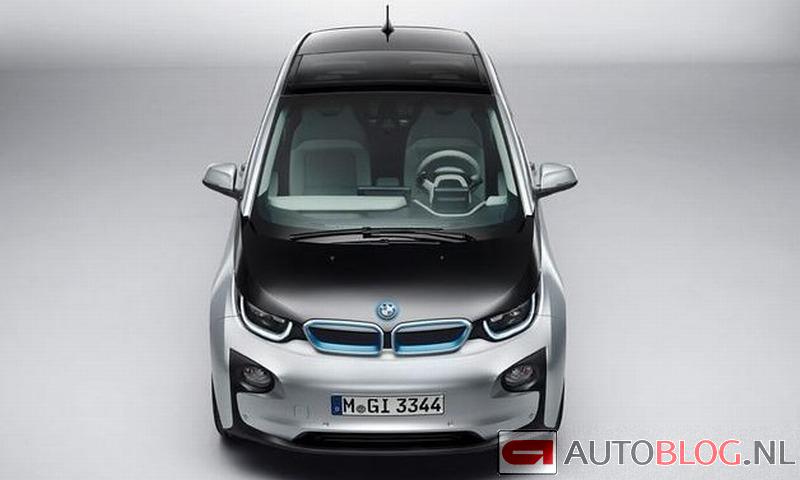
Leaked: Production i3 Pictures!

Looking very similar to the i3 concept coupe, the i3's interior is one of its finest visual accomplishments

The Dutch website Autoblog.nl just released what appears to be a full set of production-ready i3 pictures, no doubt supplied by BMW to a Dutch newspaper which probably released them a few days before they were supposed to. I would believe they were supposed to hold them until after the July 29th official i3 introduction, but jumped the gun. I originally held off posting them for a few hours but they are spreading around the internet now so I suppose it's safe to put them up here as they are out there already and I don't want to be last to the party!

The elusive frunk is shown!
There aren't many surprises but we do get to see the front trunk (frunk) for the very first time. I have been trying to get a picture of this for a while, but none existed anywhere.  It looks a little bigger than I expected, and should be capable of holding two grocery-sized bags. I imagine it's where I'll keep my extension cords, connectors, portable EVSE (seen in the picture) and such.

It's also clear there will be two different interior trim levels. One has the Eucalyptus wood dash trim and the other looks a bit like exposed carbon fiber, though it's hard to tell from the pictures as they aren't high definition. Actually, they aren't even real pictures, but highly detailed marketing sketches.  Thoughts?


Sunday, July 7, 2013

LED Headlights Won't be Standard


Want LED headlights on your i3? It looks like you'll have to pay for them. Close up images of recent i3's caught driving around on public streets confirm there are two different headlights used; one being typical Halogen and the other LED. Combine that with the recent (patent?) drawings posted online by autoevolution.com and it's clear the car will have two headlight options. 

The Halogen headlights that will likely be standard
The more expensive and energy efficient LED headlights that appear to be optional
 I'm not sure what this means for the taillights which look to be blade-lit LED's in all the spy photos I've examined. Perhaps only the LED headlights will be optional and the rest of the lighting will always be LED. I think many would have assumed the i3 would be all LED in all trim levels because of the emphasis BMW has put on efficiency. Using heat pumps, uniquely tall and skinny tires, CFRP and aluminum to reduce weight, etc it would seem like a shame to then have normal halogen headlights lighting the way. If this is the case, I'm sure it's a result of BMW trying to get the base MSRP as low as possible. Will that mean the stylish wheels we've seen recently will be optional also, as well an "EV necessities" like navigation with charging station locator? We don't have long to go now and the "Vorfreude" is certainly building. I'm looking forward to getting all this information finally out in the open so we can really get down to discussing what we like and what we don't. What do you think of the headlight topic? Post your comments below.
Both i3 concept cars(the original 5 door & the more recent coupe') had LED headlights

Thursday, June 6, 2013

How Much Will It Cost To Fuel The i3?

The concept i3 coupe parked with a BMW i branded level 2 wall charger
I get asked all the time "How much does it cost to drive an electric car?" I've also had a fair share of people say " I like the car, but I wouldn't want to see your electric bill". Like gas cars, some electric cars are more efficient than others. The BMW i3 has been purpose built to not only offer the dynamic driving experience BMW customers have come to expect, but to also be a highly efficient car. But what is efficient for an electric car? Everybody understands MPG for gas cars but few really understand how electric cars are measured for efficiency, let alone how that will translate into the cost to operate it.

The ActiveE Monroney sticker
First off lets discuss how the EPA calculates the miles per gallon equivalent(MPGe) for electric cars. Gas cars have the official EPA miles per gallon listed on the window(Monroney) sticker and electric cars have a rating called MPGe. Since one gallon of gasoline creates the same energy as 33.7 kilowatt hours of electricity, electric cars are tested to see how far they can go on 33.7kWh's and that is the official MPGe which is listed on the window sticker of every new EV. The BMW ActiveE I drive has a rating of 107 MPGe. Not bad for a heavy converted gas car, but not especially good as far as electric vehicles go. The Chevy Spark EV, recently was rated at 119 MPGe making it the most efficient EV rated so far as it barely beat out the Honda Fit EV's 118 MPGe rating.

Neither The Fit EV or the Spark EV were purpose built as electric vehicles. They are converted gas cars like the ActiveE. Being purpose built as an EV with a lightweight CFRP body and aluminum frame, the i3 should easily top the Spark's 119 MPGe rating. I'm guessing the i3 may have an MPGe rating as high as 130, which will give it the "most efficient EV" crown, one that it may hold for quite some time as there is really no other EV coming out anytime soon that will challenge it in my opinion.

So lets say the i3 gets a 130MPGe rating for arguments sake. That means it will go 3.86 miles for every kilowatt hour of electricity you use to charge it or need about 26kWh's to drive 100 miles. The average price of electricity in the US is 11 cents per kWh, however that varies greatly from state to state. I pay 18 cents per kWh so for me it would cost $4.68 to drive an i3 100 miles. If I were to drive 15,000 miles per year my annual fuel cost would only be $702! How far can you currently drive on $702 in gas? If your car gets 25 miles per gallon and you pay on average $3.50 per gallon(which is lower than what we have averaged the past year) it would cost you $2,100 in gas to drive the same 15,000 miles! Plus, we all know gas prices will only climb over time. Electricity rates do go up occasionally but historically they are much more stable than gas prices. Plus, many people do have the option of installing a solar array which will guarantee a free supply of electricity for the next 25 to 30 years. There is nothing the gas and oil industry can offer to compete with solar, as the customer supplies, and has control over their own energy.

BMW will offer solar canopies to i3 customers

So whip out your electric bill and find out how much you pay per kWh for your electricity. Then divide the number of miles you drive per year by 3.86 and multiply that by your electricity rate and you'll know how much it would cost you to fuel an i3 for a year. I'm sure you already know how much you dump into the gas pump so calculating your savings won't be too hard. Of course if you want to save even more you can install a solar array at your home like I did and start making your own electricity. Sure there's an initial outlay of cash for the solar system and not everybody can afford it, but if you can it's a fantastic set up and you'll have it paid off in a few years of savings from driving your i3 on sunshine!

Friday, May 31, 2013

BMW i's Ulrich Kranz Talks About How BMW i Started

Kranz stands in front of the CFRP passenger cell of an i3 used for crash testing.

BMW i Project manager Ulrich Kranz recently spoke with Automobilwoche about how BMW i came to be. Automobilwoche's sister publication Automotive News Europe then posted the following interview on their site:


How did Project i get started? Did BMW CEO Norbert Reithofer knock on your door one day and say: The two of us need to discuss the future of the automobile?
- It wasn't entirely like that. At that point, some management board workshops were under way and dealing with the future of BMW. A number of initiatives were developed to get BMW in shape for 2020. Project i was an initiative that we carried out as part of our Number One strategy.

Was it already called that?
- Its name was already Project i, and in 2007 I got the job of turning it into a reality.


What were you asked to do? 

- The job was to position BMW for the future -- and that was in all fields: from materials to production, from technologies to new vehicle architectures. The agenda included the development of sustainable mobility concepts, new sales channels and marketing concepts, along with acquiring new customers.


How great was your freedom?
- I had the freedom to assemble a team the way I wanted. The project was not tied to one of the company's brands so it could tackle any problem. We were allowed to completely break away from the existing structures.


How big was the team at the start?
- Besides myself, it was a team of seven at first: a designer; a vehicle architect; a purchaser; and three other specialists in production, marketing and finance; and then someone to keep the whole organization running. We call that individual a process steerer.


How big is your team now?
- Today several hundred people work on the development of the BMW i vehicle and the mobility services associated with it.


What criteria did you use to choose your people? Did you look for visionary types?
- I was allowed to obtain the right employees both internally and externally, and that is what I did. One issue was very important to me: I looked for people who had once been independent professionals or were operating their own businesses because they approach an issue holistically, consider the long term and think strategically. In addition, I brought a mix of young guns and veterans who had already brought a vehicle to volume production.


How did everything proceed after the team was established?
- At first, we launched an intensive research phase that dealt with mobility questions and customers' future needs. Where do we need to delve deeply into the issue of sustainability? How well will customers accept a new product and a new technology such as electric mobility? Urbanization was one of the identifiable trends. In 2007, more people already lived in cities than in the countryside. Based on forecasts, more than 60 percent of the world's population will live in an urban environment in 2030. We wanted to see what that meant concretely on site.


Where did your team travel?
- We traveled to a total of 20 mega-cities, including Los Angeles, Mexico City, London, Tokyo and Shanghai. We met people who live in metropolises and who indicated that they had a sustainable lifestyle. We lived with them, traveled with them to work and asked questions.


What did you ask them?
- We wanted to know the products that they would like from a car manufacturer, how their commute to work could be improved and how they imagined their mobility in the future. As a second step, we asked the mayors and city planners in each metropolis about their infrastructure problems, the regulations for internal combustion engines and the advantages of electric vehicles.


What findings did you reach?
- One finding was that there are great differences between the metropolises. For example, Barcelona is an old city with narrow streets that has grown over time. The demand for scooters is high there. In Mexico City, cars provide protection and a retreat to escape all the hectic activity there. In Tokyo, there is a good traffic control system; customers want to be well networked in their vehicles and get an overview of all the control systems. Some cultural circumstances surprised us as western Europeans. For example, a large portion of the Japanese living in Tokyo between the ages of 18 and 22 are not even interested in getting a driver's license.


Why has no special small car been developed for metropolises with little space for parking?
- That also occurred to us. But all our inquiries told something else: Customers do not want to do without comfort and safety. They are actually very sensitive to environmental issues, but they are not willing to put up with substantial limitations in their vehicles.


How do your respondents plan to travel in the future?
- Despite the traffic jams, many people do not want to do without a car of their own.


Parallel to your research, you promoted the pilot project for the electric Mini E. Why?
- It was clear to us relatively quickly that the first stage in development would be a car that operated as environmentally friendly as possible, meaning emission-free. The simplest, quickest way to see how an electric vehicle would go down with the public was to convert an existing car and send it into the market. A Project i team had customers test electric Minis in Europe, Asia and the U.S. The findings proved extremely valuable to us.

Where did you get the idea to construct the passenger compartment of carbon?
- We knew that we needed a lightweight vehicle and that we had years of expertise in carbon-fiber reinforced plastics and mixes of materials. We asked ourselves how we could reduce throughput times and the investment in manufacturing through the use of a new vehicle architecture.


Can you cite an example?
- One example is the paint shop: a large building involving high investment and long throughput times. If it were no longer needed, we could save a tidy sum of money. The desire for a completely corrosion-free vehicle emerged from the development department. Carbon-fiber reinforced plastic met these standards, but it had to be cost-effective -- or we had to compensate for the price somewhere else. A smaller vehicle could get by with a smaller battery, and the battery is considerably more expensive than carbon-fiber reinforced plastic. So one thing led to another.


When did it become clear that the Megacity Vehicle would be a carbon vehicle?
- We discussed the issue with the management board in 2008.


What was Project i's greatest challenge?
- This is a very comprehensive project. One is developing a technology separately within one team. Balancing out the entire Project i, considering all the aspects and keeping them all in view, that was each of the participants' true masterstroke.


Initially, did you think the job would be so wide-ranging?
- That was clear to me immediately. I saw it as a real opportunity. But you have to find good people who also see such a major undertaking as an opportunity. And we have these people.

Kranz gave Georg Kacher of Car Magazine a ride in a test i3 a few months ago. Kacher was very impressed and wrote a glowing article on his impressions.


Thursday, April 18, 2013

BMW i3 Exclusive New Color: Solar Orange Metallic

Autoevolution scored some spy photos of a BMW i3 with a new color exposed. It's evidently a new color for BMW that will be exclusive to the i3 and it's called Solar Orange Metallic. BMW describes the new color as: "a warm shade bursting with energy that was created especially for the BMW i3." Autoevolution also said "For contrast, the bonnet and part of the boot lid will be gloss black" which would indicate the hood of the i3 will not be the painted the color of the rest of the car, but instead will be gloss black.

This was true for both of the concept i3's that BMW has shown but I think most people just assumed they had the two tone color scheme for dramatic car show effect. It's interesting to me because the hood & roof are CFRP, while the majority of the body is plastic panels that are bolted onto the CFRP frame. So if Autoevolution is right it would appear all the exposed CFRP will be simply gloss black regardless of the color of the rest of the car. And the tidbits of info keep coming...