Showing posts with label M3. Show all posts

Friday, March 21, 2014

Born Electric Guest Blogger: Meet Ross from The UK

 
Ross and his new baby in front of  Chatsworth House, Derbyshire
Hello, I'm Ross from The UK and I was Born Electric on Saturday, March 1st, 2014.

Why an i3?

I will start this blog by saying that I am totally obsessed by cars.  I love cars, I always have, and the cars that find their way into our household are usually of the performance variety, ranging from TVRs to Hondas with even the occasional 4x4.  To be perfectly honest, electric cars had never really appeared on my radar.  I was aware of them obviously, but had never considered owning one.  My view was that most of them were slow, couldn’t go very far and generally a bit dull.  


However, one of my favourite websites is Pistonheads, and I happened to read their review of the new BMW i3 back in October.  Wow!  This sounded like one exciting little car.  So, at this point I started doing some more research, reading every i3 review I could find.  At this time, my car was an E92 M3 and my wife was driving a Jeep Grand Cherokee.  This meant that we had two cars that were pretty expensive to run.  Both had annual road tax of £490 and not so great fuel consumption.  So, the i3 was beginning to sound attractive as it was fun, funky and cheap to run.  That the electric only version could be run as a company car with zero benefit-in-kind was the clincher.

So, it came to be that I ordered an electric only i3 without seeing or test driving one - with the proviso that I could cancel my order if I didn’t like it when I test drove it.  I had to wait about 3 weeks till the 16th November before I could get my hands on one.


Is it a real BMW?
I have owned three BMWs previously, an E46 330i (saloon), an E91 335i (touring) and the E92 M3 we have now. My wife had also owned two minis, a Cooper S and a Cooper S JCW. So we had high expectations. Before getting our test drive, we had an opportunity to have a good look around the showroom car. The consensus from all the family was that it was larger than expected and that from the outside the overall appearance was ‘funky’. Inside the i3, it was even better; the interior feels really modern especially with the large central nav screen.


i3 curb.jpgWe were blown away on the test drive.  Putting your foot down just elicits a huge grin.  It is such a hoot to drive.  The instant and rapid acceleration takes a bit of getting used to but is addictive.  Also being able to drive with just one pedal is great and it only takes a few moments to become accustomed to it.  We were sold!

It really does drive like a BMW; the way it handles the road and the feel of the steering all felt familiar.  Since taking delivery of my own i3, I have also taken it to a local sprint circuit.  The circuit is only 600 metres in length but over 3 laps the i3 was great.  It really surprised most of the people there and I was posting times that were quicker than two MX5s, an MR2 and and an E36 328i.  I have also since discovered that the i3 is compatible with the ///M laptimer app.  That said, don’t buy one as a track car!  The range was down to just 43 miles on the day including driving there and back on a dual carriageway.  The M3 is much better suited to track work.


The Options
For anyone considering the purchase of an i3, the options list can be a bit daunting.  I chose laurus (laurel in the US) grey which I am really pleased with and the standard interior because I liked it!  Suite was a consideration but at £2,000 I felt it was too expensive.  I have recently discovered that the mood lighting with colour change is not included with the standard interior - this isn’t mentioned in the brochures or the website.  I was lucky to get the Pro Sat Nav free as I placed my order early and I think everyone should consider this as it really suits the interior of the car.  I ordered the heat pump option as BMW erroneously told me this was required to preheat the vehicle - it isn’t. Supposedly this gives better range in cold weather due to more efficient heating, but as I have nothing to compare it too I have no idea how effective it is. The Harmon Kardon hi-fi option is utterly brilliant and I am really pleased that I added that to my spec. In my opinion the standard wheels are awful, and the 428 alloys I ordered receive very positive comments. The heated seats are the fastest / hottest of any car I’ve owned and therefore a must.

I’ve had the car for just over two weeks and already done more than 900 miles.  Range anxiety really hasn’t been an issue although I have got home a couple of times with only 3 miles left.  It’s a great car and it seems that for the distances we generally travel it is going to meet most of our journey needs. For those occasions when it doesn’t I will just have to put up with that howling V8...
_______________________________________________________________

This makes the seventh Born Electric guest blogger here. The other posts can be viewed here: 

Andy from The UK 
Hil from Holland  
Toni from Belgium 
Jan from Belgium 
Steven from The Netherlands   
Jon from Norway

If you own an i3 and would like to participate here in the Born Electric guest blogger series, email me at: tom.moloughney@gmail.com

Wednesday, January 22, 2014

I Was Born Electric On...The First BMW i3 Owner Review:

 
A while ago I announced that I would be starting a new series here called, "I was Born Electric on...". I'll be featuring readers who are i3 owners and who are willing to share their thoughts on the car after taking possession. They will begin the post by introducing themselves and stating the date they were Born Electric, which is when they picked up their i3. Without further ado, I bring you Andy from the UK, our first i3 owner & Born Electric guest blogger:
 
Hi, my name is Andy and I was Born Electric on Saturday, January 11th,  2014.

I came to the EV party a bit late in the day, as I was a typical petrolhead and dismissed electric cars as an irrelevance - underpowered, no range, ugly, the usual stuff - and even when I first saw the i3 concept, it looked weird & the projected price seemed way too high (I think a projected £40,000 base price was mentioned at the time).  So I ignored it and carried on driving my gas guzzling M3, even though I wasn't enjoying the daily grind in it: mainly in traffic, 40+ miles a day, costing me around £350 a month in petrol. The only times I really got to enjoy the M3 was on my drives with the guys at Petrolhead Nirvana, who arrange trips to Scotland, Wales, the Alps, and elsewhere - amazing places where you can give a 400hp car a bit of stick. More about them later.

Then the i3 proper was launched in August, and at seemingly sensible prices (c£25,000 after the UK grant), with leasing costs at around £350 a month.  Hey, that number looked familiar - an idea began to formulate in my mind... and a few days later, early August 2013, I was putting down a deposit. My man-maths (or man-math for our American cousins) told me that the fuel saving, together with fewer miles on the M3 meaning lower depreciation, less tyre wear & fewer services, could make the i3 a “free” car!  A quick spin in an ActiveE in September blew me away and confirmed my thoughts that I was doing the right thing, then an actual i3 test drive in early November really sealed the deal.  Except the demo car was loaded with extras which I had a chance to play with, so my originally bare bones car ended up, if not fully loaded, at least three-quarters loaded. On top of the gadgets like Parking Assist & Driving Assistant, I liked the wood on the dash, but I also liked a darker interior that wouldn't show the dirt so much, so the Suite (Tera in US) interior was added in too. Suddenly my arithmetic wasn't adding up quite so well, but too late now!

Delivery was scheduled for late January, but you'll have gathered that I was hardly racing to be the first owner of an i3; I figured there had to be many UK buyers who'd been more far-sighted & quicker off the mark than me. So I was really surprised to be the first in the UK - or at least, the first in the UK on the mybmwi3 forum - to take delivery of an i3.  As I write, 10 days after, it seems there have been no more deliveries still, and there's even talk of further delays, so I don't know how mine beat the blockade, but I'm glad it did!

The Wallbox
Before the car was due at the end of January, I had to get one fitted at home, so after a fair bit of chasing, I took a call on Monday 6th January booking me in at short notice for the following Thursday - "we'd better get on with it as your car's at the dealers". Wait, what?! A quick trip down there after work confirmed there was a car matching my order exactly, sitting there quietly - but the dealer at first denied it was mine!  A bit of pushing from me finally established it was mine, but also that there was a mistake on my invoice, putting the dealer's £5,000 grant from the government in potential jeopardy. So while it was all sorted out, my car sat there doing nothing, just out of my grasp, and I eventually took delivery on the Saturday. Frustrating - but in light of the delays others are experiencing now, I should've been more patient!

It turned out my house, built around 1900, had electrics that weren't much newer, so neither the supply to the house nor the cable to the garage were up to the job of charging at the full 7.5kW. I've ended up with half that, but that's plenty to recharge the car from almost flat to 100% overnight. The BMW wallbox is a big ugly thing though, and I wish I'd gone for the smaller & cheaper option made by Polar, or one of its competitors. I think for the charging rate my house will support, it would've been free in fact.

My first few miles
My first day as an EV driver was spent going round friends & relations, and blowing their minds. I'm sure this is old news to all you current EV drivers, but the whole experience is so alien, yet so pleasurable, that a huge grin is inevitable the first time you try it, whether driving or as a passenger. It’s a fantastic talking point too – friends, clients, even strangers are all eager to know more about what the future of motoring holds for us all.

My first long trip. Range Anxiety - what's that then?

Only 6 miles to spare!
Each month, Petrolhead Nirvana (the guys who organize the long distance driving trips) hold a meeting at the Ace Cafe, a famous venue for car & bike owners in northwest London.  January’s meet was only two days after I'd taken delivery, but I was keen to take my new toy to show off to my pals there, although it wasn't quite in the spirit of the occasion - people usually bring their Ferraris & Lambos, M-cars & 911s. I was fairly sure they wouldn't kick me out, but there was another hurdle for someone with a 2-day old pure electric car (I'd avoided the REx on cost, performance, and purity grounds - lugging a petrol generator around everywhere seemed to spoil the whole idea, and with a bit of planning, didn't seem necessary, for me anyway) - the Ace is about a 70 miles round trip, and at that stage of my ownership, a whole week ago, I really wasn't sure if I'd make it.  I know better now! A cold & slow EP+ drive up there left me with plenty of range (especially after borrowing some electricity from the cafe manager, thanks Nick!) to give some rides to my Petrolhead mates, all of whom raved about it - the more demo cars BMW can get out there, the more they'll sell, definitely - and to drive home in Comfort mode, and in comfort, with the heating on and a heavy right foot. I figured that if the range remaining got close to the distance to home, I could soft-pedal and knock it back to EP or even EP+ mode and still get home. Using this method, I had a fantastic fast drive back through London and made it home with 6 miles to spare - a close call, but I really didn't feel worried at any stage.

Range Reduction vs Miles Traveled
Since my epic(!) trip, it's been the usual commute for the last week, and as I know I'm going to do around 50 miles a day at the most, I drive it without thinking about economy at all. As a result, my iPhone's been telling me I have 75 miles at the start of the day (100% SOC), but then my spreadsheet tells me that my range reduces by about 13 miles for every 10 miles I drive, even though the car's had a few days now to predict it accurately. So if I drove normally (for me), I'd be stranded at about 60 miles. Don't be alarmed though - if I needed to go further in a day, I'd drive differently,  and get maybe 90-100 miles. I don't know for sure yet though, as driving economically is next week's experiment! 

As it is, one thing I'm enjoying immensely is coming home, plugging it in, and knowing that a few hours later I’ll have a full “tank” for minimal cost.  I'm certainly not missing my frequent visits to the petrol (US: gas) station, and it feels strangely liberating each time I drive past one. If you haven’t experienced it yet, you'll love it.

Performance - the i3 vs M3 race
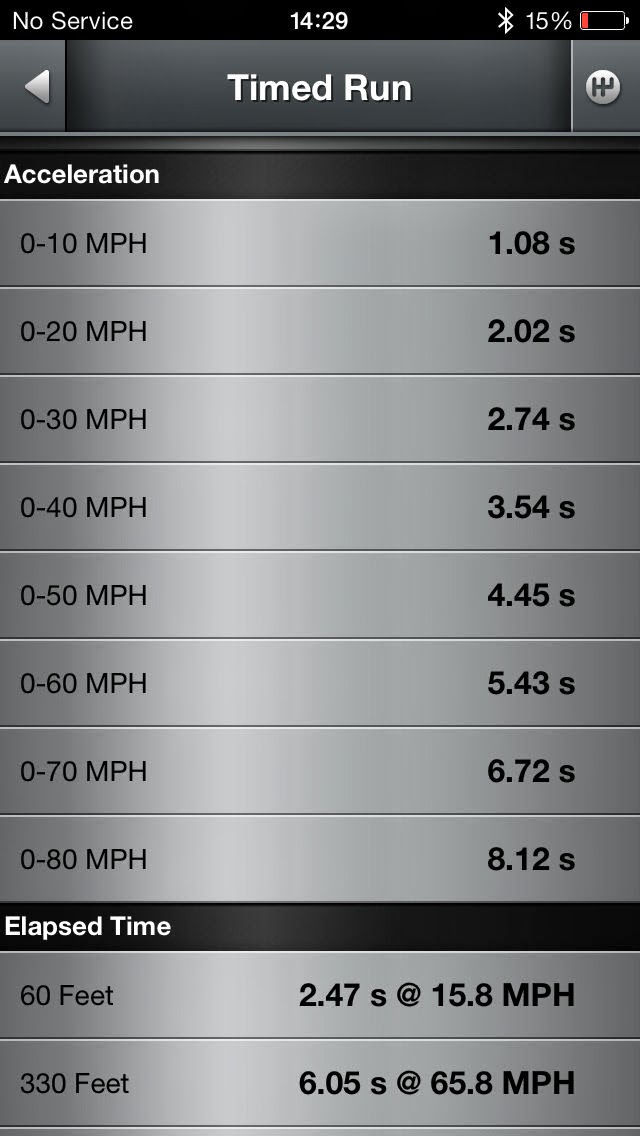
You've probably seen this video of the drag race at Brands Hatch from the UK launch, where the i3 storms ahead of the M3 before finally being overtaken at maybe 50mph. After driving the i3 for a week, and being in the fortunate position of having both cars, I thought it didn't quite seem right, and once the weather improved enough to get the M3 out of the garage, I fired up my Dynolicious app (no, this wasn't going to be a properly scientific test!) and set off - to a test track near me, obviously.  The i3 was very easy to measure consistently – just put your foot down. The M3 needed a bit more finesse, and it was strange having to get used to driving it again after only a week. It turned out that, surprise surprise, the i3 was quick, but not as quick as an M3. To its credit, it was only a second off at 50mph (5.5s vs 4.5s), but then I wasn't really trying in the M3 as it was a bit damp and I had to be careful with the throttle.   If the M3 was properly driven by someone who knows what they're doing, the gap would be much wider I'm sure. Click on the pictures to enlarge:
i3 Stats
M3 Stats


Tech Stuff
I guess I’m a bit of a geek, although I don't profess to be any kind of computer expert. I do enjoy fiddling with technology though, and that's one of the things that attracted me to the i3 - I'm especially enjoying stuff like the Driving Assistant, almost making my commute enjoyable, and the Parking Assist just makes passengers laugh! The voice control is very good, much better than the old iDrive's in the M3, and the phone call sound quality over Bluetooth is much better too, helped by the quietness of the car I guess.  And coming down to a toasty car with a clear windscreen on a frosty morning is superb!  However, I somehow imagined the quiet peaceful surroundings of the car, and using the Active Cruise Control, would get me to work completely relaxed and happy, but that was expecting too much: it still takes me just as long, and there are just as many idiots on the road, after all.  Even an i3 can’t magic them away! Some of the tech is pretty tricky to figure out, even for a geek like me, and I wonder if BMW will lose some of their potential audience - people who aren't tech-savvy but who would otherwise be perfect for an EV might get scared off.

Problems
Waiting patiently at the dealer
There's also stuff that doesn't work so well, including both the things I've just praised. The Active Cruise Control, part of the driving assistant, intermittently (but quite often) switches itself off, saying it's outside its working parameters - even when it's in the same conditions it was working fine in a minute ago. I'm not sure if it’s a design “feature”, or if my car has a fault. The Parking Assist threw a fit last night too, just when I was showing it off to someone, naturally. As it began to reverse, it lost track of where it was and slammed on the brakes (it sounded like the ABS came on, even though we were going slow), with dire messages appearing on-screen about the system being broken and insisting the car be taken to a dealer ASAP.  I turned it off and on again (see, I do know about computers) and it worked fine.  I've dropped it in to the dealers today though, and they're sending the diagnostic report off to BMW to see what they say.

The rear doors can be closed quite gently before you close the fronts - but if you do, a warning appears on the dash as you drive round corners saying they're open! A proper slam to close them does the trick; the dealer's looking into that too. Finally, some of the connected drive stuff is pretty poor (not unique to the i3, I realize); Facebook & Twitter don't give you enough of each post to be useful, email doesn't work at all unless you have a Blackberry apparently, and the apps like Napster & Audible are very clunky to operate.
Andy's stable is worthy of envy!
Summary
So, it's fair to say that overall I'm really pleased with my i3. It's quick, interesting, cheap to run, well made (niggles aside - but it feels solidly put together), and superbly designed inside. I'm still not 100% keen on the exterior looks, but she's growing on me. The Andesite paint looks great in some lights, a nice technical shade of grey, possibly with a very slight hint of brown to go with the dark brown leather interior & the wood on the dash - and in other lights it just looks like old man's beige! I rather wish I'd gone for a different colour, but unlike Tom, I like the contrasting black hood & roof, so the dark greys are out. And I don't like white or silver - so bright orange is what I should've gone for. Next time, eh? For now, I'm looking forward to many happy miles in this futuristic vehicle which seems to get everyone talking.  I might be a latecomer to this particular party, but hey, I’ve got the perfect ice-breaker!

If you own an i3 and would like to participate in the Born Electric series here, you can email me at: tom.moloughney@gmail.com

Tuesday, November 12, 2013

i3 vs M3: Mano e Mano


Last week BMW held a press event for the UK launch of the i3 and allowed journalists the opportunity to have an extended test drive of an i3. However that's not all they let them do. BMW also arraigned to have the journalists drag race an M3 that was driven by one of BMW's professional drivers.

The first day of the event the i3 was beating the M3 to 60 mph which took a lot of people by surprise. While the i3 is a very quick car, it isn't M3-quick so some of the journalists were scratching their heads a bit. However it was lightly raining that day and while the M3 was struggling to get traction, the i3 with its thin tires was jumping off the line much quicker and holding off the late charge of the M3. When one journalist questioned if the M3 driver was holding back, BMW let him drive the M3 himself in another race and he promptly lost to the i3 also.

The next day was a little different with dry pavement as seen in the above video. The i3 still jumps off the line quicker, but the massive engine of the M3 is too much for the i3 and halfway through the race to 60 mph you can see it gaining and then easily passing the i3 before they hit the goal of 60 mph.

I've enjoyed the instant torque that my EV's have offered and frequently comment on how that is one of the advantages electric vehicles have over internal combustion engine cars. It really helps to make the EV driving experience better in my opinion. However I can't help but wonder if the M3 didn't have traction control working or if it had some other handicap that we weren't told about. The i3 is quick and I promise it will be a blast to drive, but the M3 is built for one thing- speed, and goes 0-60 in about 4.8 seconds compared to the i3's 7 seconds. It's hard to see how this race was as close as it appears. Still - this is exactly the kind of stuff I want to see from BMW. The i3 is a competent performer as well as an efficient EV built with a focus on sustainable manufacturing and materials. Sustainable is great, but it's the fun stuff like this that gets people excited about the car and what will ultimately sell them!

Tuesday, September 24, 2013

New BMW M3 Sedan, BMW M4 Coupe Official Specs.

The launch of the new BMW M3 Sedan and new BMW M4 Coupe sees BMW M GmbH revealing an all-new interpretation of the high-performance sports car – and carrying the BMW M philosophy over into the fifth generation of the M3. More than 40,000 examples of the fourth-generation BMW M3 Coupe were built, and now the BMW M4 Coupe is poised to continue this history of success. The “M4” badge is a reference to the model series that provides the basis for the new M model. And for the first time, the Coupe will be introduced at the same time as the four-door variant, which logic dictates will be christened the BMW M3.


“Four generations of the BMW M3 have blended motor sport genes and uncompromised everyday usability within an emotionally rich overall concept;” explains Dr Friedrich Nitschke, President BMW M GmbH. “The BMW M3 Sedan and BMW M4 Coupe represent an ongoing commitment to this philosophy. The engine is the heart of every M model, and the example fitted in the two new cars combines the virtues of a high-revving naturally aspirated unit with the strengths of turbocharger technology. An all-embracing lightweight design concept keeps the cars’ weight to just under 1,500 kilograms. The BMW M3 and BMW M4 take motor sport technology from the track to the road, and thousands of laps of the legendary Nürburgring Nordschleife – the world’s most demanding race track – have readied the new models for that transition. Meticulous and passion-fuelled development work has underpinned the creation of two high-performance sports cars that set new standards in terms of overall concept, precision and agility.”
The high-revving six-cylinder in-line engine with BMW M TwinPower Turbo technology newly developed for the new BMW M3 Sedan and BMW M4 Coupe produces maximum output of approximately 430 hp. Its peak torque soars far beyond 500 Newton metres (369 lb-ft), outstripping the figures recorded by the outgoing BMW M3 by well over 30 per cent. And yet the engine also achieves a reduction in fuel consumption and emissions of around 25 per cent. The weight of the cars has been reduced to just under 1,500 kilograms, which helps to ensure outstanding driving dynamics and exceptional efficiency.


2. The balance of the overall concept:

A blend of elements working in perfect harmony delivers outstanding performance, precision and agility.

The new BMW M3 Sedan and new BMW M4 Coupe share a low-slung and broad-set, yet finely balanced, stance on the road, highlighting the emphasis on performance capability in the emotional development of M design. Large air intakes at the front end, exposed carbon-fibre-reinforced plastic (CFRP) components and the diffuser at the muscular rear end are far from mere design flourishes; they also fulfil functional roles in terms of aerodynamics, cooling and weight saving.

Numerous aerodynamics measures integrated into all areas of the body.
The aerodynamics concept of BMW M GmbH models has always been one of the key elements in their development. The engineers need to channel the air around the car to create the best possible platform for dynamic excellence, while also ensuring the engine, powertrain and brakes receive the requisite cooling given the significant loads they are operating under. But at the same time, the cars should also have a good Cd – an indicator of impressive efficiency at higher speeds, in particular.

Details such as the powerfully formed front apron, smooth underbody and clearly defined Gurney spoiler lip at the rear of the M3 Sedan (or integrated spoiler lip at the rear of the BMW M4 Coupe) reduce lift by an equal degree at the front and rear axle and produce optimum handling attributes. These examples underline in familiar fashion the success of M engineers in reconciling the requirements of everyday use with the demands of action on the race track. Elements like the Air Curtain and M gills with integrated Air Breather rearwards of the front wheels minimise turbulence in the front wheel arches. And, together with the smoothly sculpted exterior mirrors, they are also highly distinctive design features of the BMW M3 Sedan and BMW M4 Coupe.

Sophisticated cooling concept for maximum performance.
The exceptional performance potential of the BMW M3 Sedan and BMW M4 Coupe places extremely exacting demands on temperature management in the engine and peripheral assemblies. In order to ensure optimum operating temperatures in everyday use, on short journeys around town and on the race track, the BMW M GmbH engineers have developed an extremely effective cooling system. For example, alongside the two ultra-dynamic turbocharger units, the air intake system of the six-cylinder engine also includes an indirect intercooler to cool the intake air, maximising charge pressure and engine output. As well as a main radiator, the track-ready cooling concept also comprises additional radiators for the high- and low-temperature water circuits, turbocharger and transmission oil. These ensure a consistent temperature balance and therefore unrestricted performance during hard driving. An additional electric coolant pump cools the turbocharger bearing mounts when the car is stationary.    


The powertrain gains from a wide variety of motor sport technologies.

The many years of experience in motor sport clocked up by the BMW M engineers also make their presence felt in the construction of the powertrain for the new BMW M3 Sedan and BMW M4 Coupe. For example, the engine’s impressive torque is sent on its way by a forged crankshaft with high torsional rigidity, whose low weight also allows a significant reduction in rotating mass. The crankshaft therefore helps to optimise the engine’s responsiveness and acceleration and makes an important contribution to its high-revving character.

The engine sends its power to the wheels through a six-speed manual gearbox as standard. This gearbox is significantly more compact than its predecessor and 12 kilograms lighter, allowing it to assist the car’s optimum – virtually 50:50 – weight distribution. As a means of increasing shift comfort, the manual gearbox uses innovative new carbon friction linings in its synchroniser rings. Dry sump lubrication provides an efficient supply of oil to all parts of the gearbox. The new gearbox also works a lot more quietly than before and blips the throttle on downshifts – previously a feature reserved for the M Double Clutch Transmission. This engagement speed control function helps to enhance stability and was originally developed by motor sport engineers.

Seven-speed M Double Clutch Transmission with Launch Control.

The optional seven-speed M Double Clutch Transmission with DriveLogic takes a very special route to combining the apparently conflicting values of absolute sports performance and comfort. As well as changing gear automatically, in manual mode the transmission enables ultra-fast gear changes with no interruption in the flow of power. The integrated Launch Control function ensures optimum sprinting performance off the line, producing acceleration figures that would be out of range with the manual gearbox. The M Double Clutch Transmission also offers drivers extra functions, such as selectable modes which make the BMW M3 and BMW M4 more comfortable, easier on fuel or even sportier. The extra gear over the manual gearbox allows more tightly spaced ratios – and delivers the positive effects on performance and efficiency you would expect as a result.

The material properties of carbon have allowed the engineers to follow a fundamentally new approach in the manufacture of the drive shaft. This component feeds the engine’s torque from the gearbox to the rear differential and works under extremely heavy loads – especially in high-performance vehicles. The impressive stiffness and low weight of CFRP as a material allow the drive shaft to be constructed as a single-piece unit with no centre bearing. As well as a weight saving of 40 per cent over its predecessor, this leads to a reduction in rotating masses and, in turn, to sharper responses to movements of the accelerator, combined with enhanced dynamics.

Another feature that adds fresh polish to the dynamic repertoire of the BMW M3 Sedan and BMW M4 Coupe is the Active M Differential. Unlike the manual system used by the outgoing BMW M3, here an electric actuator constantly varies the locking effect, as required. That enables better traction, the adjustability of the car is improved, and understeer coming out of corners is dialled out to impressive effect. M Dynamic Mode – a subfunction of the Dynamic Stability Control (DSC) system – quenches the thirst of enthusiastic drivers for keen dynamics. While DSC intervenes as required to counteract understeer and oversteer, M Dynamic Mode allows greater wheel slip and therefore easy drifting. Owners with a taste for sporty and dynamic driving will appreciate this breadth to the cars’ handling, although DSC will still step in if the car ventures over the limits – unless it is switched off completely. Whichever setting the driver chooses, he or she remains responsible for the car’s stability.

Aluminium suspension elements ensure sharper dynamics.

The core expertise of BMW M GmbH resides in creating cars that offer impressive steering precision, on-the-limit adjustability, agility and driving feeling, together with unbeatable traction and outstanding directional stability – all without neglecting everyday usability. In order to blend these attributes with the significantly increased performance capability of the new BMW M3 Sedan and new BMW M4 Coupe, the axles of the outgoing BMW M3 have undergone further development and all relevant components have been newly designed or constructed.

Here again, low weight and a high level of structural rigidity are essential ingredients in ensuring the cars provide an ultra-dynamic driving experience. In the double-joint spring strut front axle alone, the use of a lightweight aluminium construction for components such as control arms, wheel carriers and axle subframes saves five kilograms over a conventional steel design.

Play-free ball joints and elastomer bearings developed specially for the BMW M3 Sedan and BMW M4 Coupe ensure an optimum and direct transfer of forces both laterally and longitudinally. An aluminium stiffening plate, CFRP front strut brace and additional bolted joints between the axle subframe and the body sills all help to increase the rigidity of the front structure.

Also lighter than the construction in the outgoing BMW M3 is the new five- link rear axle. All the control arms and wheel carriers are manufactured using forged aluminium, which reduces the unsprung masses of the wheel-locating components by around three kilograms compared with the previous model generation. The rigid connection between the rear axle subframe and the body – without the use of elastic rubber elements – is borrowed from motor sport and serves to further improve wheel location and therefore directional stability.

The development of the tyres for the cars was incorporated from the outset into the construction process for the axles. For high-performance sports cars like the BMW M3 Sedan and BMW M4 Coupe, in particular, steering feel and precision are the foremost considerations in the development of tyres for the front axle, alongside lateral stability and braking forces. At the rear axle, meanwhile, traction, lateral stability and directional stability take centre stage. For this reason, both cars will leave the factory on low-weight forged wheels with mixed-size tyres. The specially developed forged wheels make a significant contribution to the reduction in the cars’ unsprung masses and, in turn, to the optimisation of dynamic qualities and efficiency.

Electric Power Steering with three settings.

The electromechanical steering system used in the BMW M3 Sedan and BMW M4 Coupe is a new development from BMW M GmbH. It has been tuned specially to assist the cause of dynamic driving and offers the gifts of direct steering feeling and precise feedback. The integrated Servotronic function electronically adjusts the level of steering assistance according to the car’s speed, providing optimum steering characteristics at all speeds. The steering for the BMW M3 Sedan and BMW M4 Coupe also offers the driver three steering characteristics as standard, which can be selected at the touch of a button. COMFORT, SPORT and SPORT+ modes allow the level of steering assistance to be adapted to suit the situation at hand and the driver’s personal tastes.

The optional Adaptive M suspension likewise comes with COMFORT, SPORT and SPORT+ modes, enabling the driver to choose between a more comfortable damper setting for motorway driving, for example, a stiffer set-up for dynamic driving on country roads, and a third option that minimises wheel movements and maximises dynamic performance for use on the track.

With their supreme dynamic attributes in mind, the BMW M3 Sedan and BMW M4 Coupe also come as standard with BMW M compound brakes boasting impressive feel, outstanding stopping power and high resistance to fade. Far lighter than conventional equivalents, these brakes contribute to a substantial reduction in unsprung masses and therefore help to enhance dynamic performance. Even lighter BMW M carbon ceramic brakes can also be specified as an option, their further optimised performance attributes equipping them even more effectively for track use.


3. New six-cylinder in-line engine:

High-revving, turbocharged engine combines the best of both worlds.

The new BMW M3 Sedan and new BMW M4 Coupe from BMW M GmbH see a return to a six-in-line engine configuration, as used on the second and third generations of this iconic sports car. The new turbocharged unit, which can develop more than 7,500 rpm, combines the best of both worlds – on the one hand a high-revving design for instant response, linear power delivery over a wide engine speed range and an unmistakable and characterful engine note, and on the other hand BMW TwinPower Turbo technology for maximised torque over a broad rpm range. A further hallmark of this engine is its outstanding efficiency.

The new engine sees a slight power upgrade over the previous V8 to approximately 430 hp, while peak torque has been increased by well over 30 per cent to substantially more than 500 Newton metres, and is maintained over a very wide rev band. The new powerplant also boasts excellent fuel consumption, with an improvement of more than 25 per cent over the previous model’s figures, while emissions are already EU6-compliant.

The BMW M TwinPower Turbo technology comprises two mono-scroll turbochargers, High Precision Direct Injection, VALVETRONIC variable valve timing and Double-VANOS seamlessly variable camshaft timing. The variable valve and camshaft timing provide fully variable control of intake valve lift. This allows the engine to deliver its power smoothly and efficiently, resulting in lower fuel consumption and emissions. At the same time, throttle response is even sharper than before.

The six-cylinder engine features a closed-deck crankcase design, which increases rigidity and allows cylinder pressures to be increased for maximised power output. And instead of liners, the cylinder bores feature a twin-wire arc-sprayed coating, which results in a significant reduction in engine weight.

A further technical highlight is the forged, torsionally rigid crankshaft which, as well as providing increased torque-carrying capacity, is also lighter in weight. Its reduced rotating masses also improve throttle response and acceleration.

Track-ready cooling system and engine oil supply for outstanding performance.
The exceptional performance of the BMW M3 Sedan and BMW M4 Coupe also demands an exceptionally sophisticated thermal management system for the engine and ancillary units. To ensure optimal operating temperatures both in short everyday trips around town and also when the vehicle is being driven flat out on the track, the M GmbH engineers developed a highly efficient cooling system, comprising a main radiator plus additional radiators for the high- and low-temperature circuits, turbocharger and transmission, while a temperature-stabilising electric water pump ensures that the engine can develop its full performance at all times.

The engine oil supply system, too, reflects the extensive motor sport experience of BMW M GmbH. The low-weight magnesium oil sump, for example, features a special cover to limit movement of the oil under the effects of strong dynamic lateral acceleration. Under extreme longitudinal acceleration and deceleration, an oil extraction pump and a sophisticated oil return system situated close to the turbocharger likewise help to maintain uninterrupted oil circulation. Oil is therefore supplied continuously to all engine components in all driving situations – whether in everyday motoring or during hard driving on the track.

An engine sound in keeping with the motor sport-level performance of the BMW M3 and BMW M4 is provided by an innovative flap arrangement in the twin-pipe exhaust system. The electrically controlled flaps just before the rear silencer minimise exhaust back-pressure and produce a BMW M sound which is striking and unmistakable over the entire engine speed range, as well as giving precise feedback on engine load.

Intelligent lightweight design was a top priority in the development of the BMW M3 and BMW M4. The goal was to minimise kerb weight in order to give both models outstanding driving dynamics and exemplary efficiency. These measures have delivered impressive results. The kerb weight of the BMW M4 has been reduced to less than 1,500 kilograms, which means the new model is now around 80 kilograms lighter than a comparably equipped predecessor model – with benefits for driving dynamics and fuel consumption as well.

BMW M3 Sedan also gets CFRP roof for first the time.
On the outgoing models, the CFRP roof was confined to the Coupe version. Now, for the first time, the four-door BMW M3 will also include this striking design and functional feature. The CFRP roof brings weight savings of five kilograms in the case of the BMW M3 Sedan and more than six in the case of the BMW M4 Coupe. It also lowers the vehicle’s centre of gravity, which has a positive impact on driving dynamics.

On the M4 Coupe, the contoured roofline with the central Gurney bubble continues into the boot lid, and emphasises the even sportier personality of the new model. The newly developed boot lid of this model not only provides extremely effective tail end styling but at the same time its geometry is precisely tailored for optimised aerodynamics, while the use of carbon fibre and plastics provides additional weight savings.

The new BMW M3 Sedan and new BMW M4 Coupe also feature a CFRP propeller shaft. CFRP’s high rigidity and low weight mean that the drive shaft can be produced as a single-piece component without a centre bearing. This provides 40 per cent weight savings over the previous model, and the reduction in rotating masses results in sharper throttle response. The use of carbon in these models is a reminder that BMW is a global leader in high- strength, lightweight CFRP construction, and that it was BMW who brought out the first mass-production vehicle with a body consisting entirely of this material – the innovative BMW i3.

The CFRP strut brace in the engine compartment is a further example of how all weight-saving measures on these vehicles have also been tailored to the improvement of driving dynamics. Weighing only 1.5 kilograms, the strut brace offers superior rigidity to a comparable aluminium component, and plays a key part in the excellent steering response and precision of both vehicles.


5. DTM support for the development process:

Testing at the Nürburgring with Bruno Spengler and Timo Glock.

In the development of the new BMW M3 Sedan and new BMW M4 Coupe, the BMW M engineers could count not only on track-honed technologies, but also on the driving talent of experienced racers. For example, BMW works drivers Bruno Spengler and Timo Glock took part in extensive testing and set- up runs on the Nürburgring-Nordschleife circuit, focusing on assessment of the cars’ suspension, tyres and all elements of the powertrain. After taking the prototypes for a run-out over the legendary and highly demanding circuit, the two professional racing drivers were able to give the BMW M development team some valuable feedback.

“I’m proud to have made a contribution to the set-up work on these two cars,” explained reigning DTM champion Spengler. “The development work may not be totally completed yet, but the driving experience is already sensational. The suspension has a very sporty set-up, the feedback from the front axle is extremely direct and the grip at the rear axle is phenomenal. The engine is impressive, too. The power is right there, even at low rpm, and you can sense that you’ll be able to access the output and torque over an extremely wide rev band. I’m looking forward to driving the cars again, but I’m even more excited about driving my first laps in a BMW M4 DTM.”

Timo Glock was similarly impressed: “These two cars are capable of generating quite incredible centrifugal forces,” reported the ex-Formula One driver. 


SPEC. SHEET

ENGINE
  • Inline 6 cylinder engine with two mono-scroll turbochargers
    • Direct Injection
    • VALVETRONIC
    • Double-VANOS
    • closed-decked crankcase
    • twin-wire arc-spray coating (instead of liners) in cylinder bores reduce engine weight
  • 430 HP (approximately)
  • 369+ LB-FT (500 Nm)
  • Higher than 7500 RPM redline

TURBOS

  • Two mono-scroll turbochargers
  • Impulse charging for optimized responsiveness
  • Flow-enhanced manifolds
  • Electric wastegate actuator

COOLING

  • Double-flow oil recirculation pumps
  • Turbocharger suction system
  • Main radiator plus additional radiators for the high- and low-temperature circuits, turbocharger and transmission,
  • Large indirect intercooler
  • Low-weight magnesium oil sump
  • Temperature-stabilizing electric water pump

WEIGHT

  • Under 3,306 lb (1500kg) weight (no mention if this is curb weight and no specifics provided as to what equipment included/not included in figure)
    • compare to E46 M3 at ~3,400 lb curb weight
    • compare to E92 M3 at ~3,600 lb curb weight
    • compare to C63 AMG at ~3,900 lb curb weight
    • compare to RS5 at ~4,000 lb curb weight
  • ~ 7.68 lb/hp power to weight
    • compare to E92 M3 at 8.7
    • compare to C63 AMG at 8.7
    • compare to RS5 at 9.0
    • compare to E46 M3 at 10.25
  • Fuel consumption and emissions reduction of 25%

CARBON FIBER CONSTRUCTION

  • CFRP drive shaft
    • 40% weight savings over previous M3
    • increased stiffness
    • reduced rotating mass for better acceleration and throttle response
  • CFRP roof for both M3 and M4
    • saves 11 pounds (5kg) on M3
    • saves more than 13.2 pounds (6kg) on M4
  • CFRP roof bow
  • Carbon fiber trunk for M4 (11 pounds (5kg) weight savings)
  • CFRP front strut brace standard (weighs just 3.3 pounds (1.5 kg))

TRANSMISSION

  • Standard 6 speed manual transmission
    • automatic throttle blips on downshift
    • more compact and quieter than predecessor E90/E92 M3 6 speed
    • 26.4 pounds (12kg) lighter
    • carbon fiber friction linings in synchroniser rings
    • dry sump lubrication
  • Optional 7 speed M DCT (double clutch transmission) with launch control
  • Active M Differential (with constantly variable locking a la M5/M6)
  • Forged crankshaft

STEERING

  • Electric power steering specially tuned for M3/M4
  • Servotronic function electronically adjusts the level of steering assistance
  • Three modes: Comfort, Sport, Sport+

SUSPENSION / CHASSIS

  • Optional Adaptive M suspension (with Comfort, Sport, Sport+ modes)
  • CFRP front strut brace
  • Double-joint spring strut front axle (saves 11 pounds)
  • New five-link rear axle made from forged aluminum (saves 6.6 pounds)
  • Aluminum suspension
  • Aluminium stiffening plate
  • Rear axle subframe fixed directly to body (bolted joints between the axle subframe and the body sills, without use of elastic rubber elements).

WHEELS / BRAKES

  • Lightweight forged wheels standard
  • Staggered tire sizes
  • M compound brakes standard (in blue)
  • M carbon ceramic brakes optional (in gold)

EXHAUST

  • Exhaust features electrically controlled flaps just before rear silencer to minimize exhaust back-pressure as well as giving precise feedback on engine load.

AERO

  • 50:50 weight distribution
  • Air Curtain
  • M gills with integrated Air Breather behind front wheels

MISC

  • M3 and M4 to be introduced together (at Detroit NAIAS 2013 in January).
  • M3 and M4 developed with help of BMW race car drivers Bruno Spengler and Timo Glock's participation in extensive testing and set- up runs on the Nürburgring-Nordschleife circuit, focusing on assessment of the cars’ suspension, tyres and all elements of the powertrain.